Pantheism vs Animism
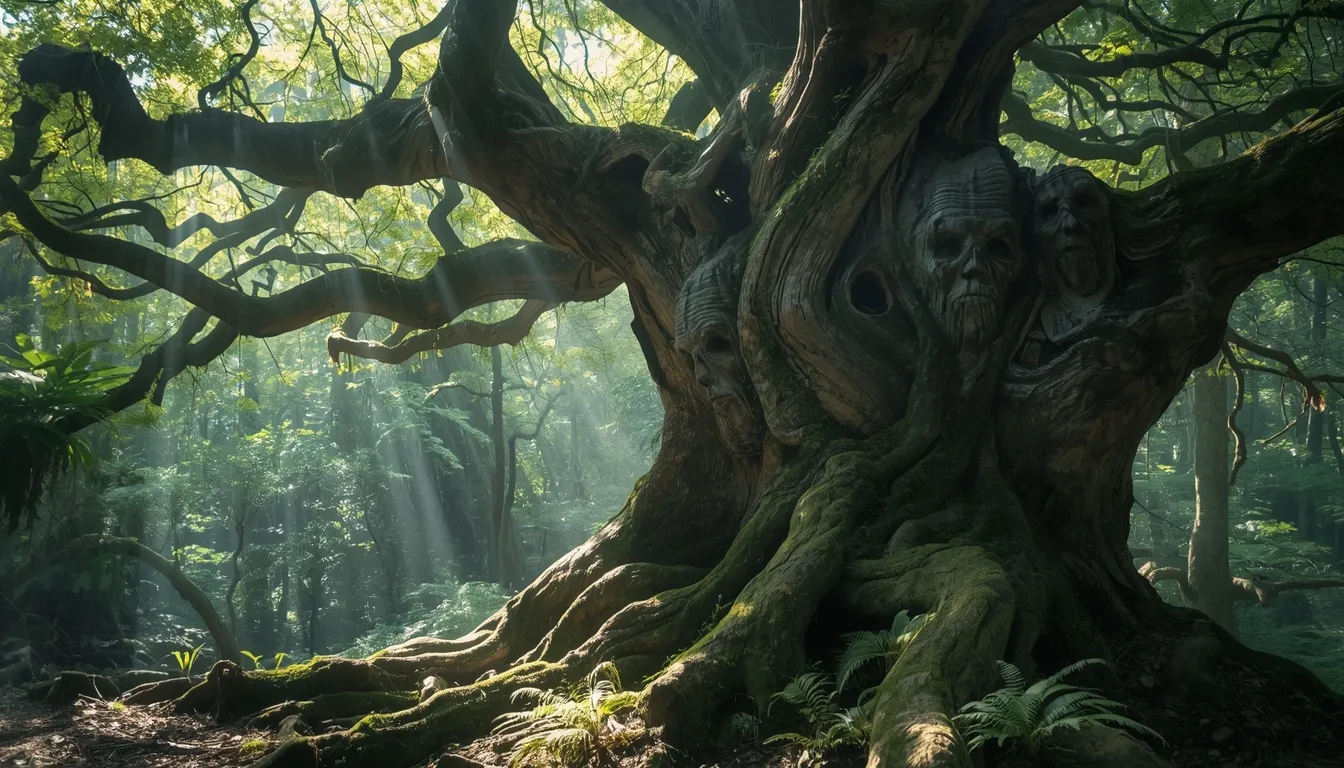
The animist hears the tree speak. The pantheist hears the forest breathe. Neither thinks it is just wood.
Animism is probably the oldest religious orientation humans have. Long before gods with names and temples, people experienced the world as full of persons: the river that could be angered, the mountain that watched, the animal that had to be thanked. Anthropologists coined the word in the nineteenth century to describe this, and many Indigenous traditions around the world still live inside it, whether or not they use the term.
Pantheism arrives late and from the other direction. It is a philosopher's position, worked out in Greek, Sanskrit, Latin and Dutch, and it says the sacred is not many but one: the whole universe, taken together, with no separate spirits inhabiting its parts. A pantheist and an animist can stand in the same grove with the same reverence and mean completely different things by it.
The two get confused because both are forms of nature reverence, and because modern pantheists often borrow animist language ("the forest is alive") without meaning it literally. It is worth being precise, because the difference matters: it is the difference between a world full of others and a world that is one.
What they share
- ✓Nature is sacred, not merely useful
- ✓Humans are part of the natural world, not set above it
- ✓No creator God standing outside the world
- ✓Reverence is expressed in place: at rivers, trees, mountains, in the wild
- ✓Both stand against the idea that the world is dead matter for us to use up
- ✓Both are increasingly attractive to people looking for an ecological spirituality
Where they part ways
Many or one
Animism is plural. The river has its own spirit, the oak its own, the bear its own; the world is a community of persons, some human and most not. Pantheism is singular. There is one sacred reality, the whole of nature, and the river and the oak are expressions of it rather than separate beings with their own inner lives. Animism says "everything is someone." Pantheism says "everything is one thing."
Do things have spirits?
For the animist, yes, in a fairly literal sense: the mountain has interiority, awareness, perhaps intentions. Relationship with it is possible and necessary. For the naturalistic pantheist, no. The mountain is sacred because it is part of the whole, not because there is a mind inside it. Consciousness appears in nervous systems, not in rock. A pantheist may speak to a mountain, but as a way of speaking to the universe, not because the mountain is listening.
Relationship versus belonging
Animism is about relationship: negotiating, thanking, respecting the other persons who share the world. Its ethics is a kind of etiquette among beings. Pantheism is about belonging: recognising that you and the mountain are the same substance, and that harm to it is harm to what you are. One is diplomacy with the world. The other is identity with it.
Ritual
Animist traditions are dense with ritual: offerings, ceremonies, seasonal observances, ways of asking permission and giving thanks. These are not optional, because the relationships require maintenance. Pantheism has almost no ritual of its own. Some pantheists borrow or invent practices, but nothing is owed to anyone, because there is no one to owe it to. The universe does not need thanking. Thanking it is for you.
Origin
Animism arises from lived experience in a landscape, over generations, within a culture. It is not a doctrine anyone argued for; it is how the world showed up. Pantheism is argued: from Heraclitus and the Upanishads to Spinoza's geometric proofs. It is a conclusion, not an inheritance. This gives animism a depth of practice pantheism lacks, and pantheism a compatibility with science animism cannot claim.
Side by side
| Question | Pantheism | Animism |
|---|---|---|
| How many sacred things? | One: the whole universe | Many: each being has its own spirit |
| Do rivers and trees have inner lives? | No; they are parts of the sacred whole | Yes; they are persons |
| Relationship to nature | Identity: I am part of it | Kinship: I live among other persons |
| Ritual | Minimal, optional, self-invented | Central: offerings, thanks, ceremony |
| Compatible with science? | Fully | Not on the question of spirits |
| Origin | Philosophical argument | Lived tradition in place |
| Found in | Spinoza, Stoics, Advaita, modern naturalism | Indigenous traditions worldwide, Shinto, some neopaganism |
Why pantheists keep borrowing animist language
Listen to pantheists talk and you will hear them say the forest is alive, the river has moods, the land remembers. Press them and most will admit they do not mean it the way an animist does. They do not think the river has a mind. So why talk like that?
Because the language of persons is the only language we have for reverence. English has no way to honour something without half-treating it as a someone. "Respect the river" already smuggles in a river that could be disrespected. Pantheists reach for animist phrasing because it captures the feeling, even though the metaphysics is different. This is honest as long as everyone knows it is metaphor. It becomes dishonest when pantheists pretend to a spirit-world they do not believe in, or claim Indigenous traditions as their own.
There is also something animism understands that pantheism can miss. Reverence for "the whole" can be abstract. It is easy to love the universe and neglect the specific creek behind your house. Animism never has this problem, because its sacred is always particular: this tree, this bend of this river, these animals. A pantheist who wants their reverence to touch the ground could do worse than learn from that. You do not have to believe the creek is a person to treat it as if it mattered on its own account.
The reverse lesson runs too. Animism, taken literally, asks you to believe in a world of invisible minds, and for many modern people that door is closed. Pantheism offers a way to keep the reverence without the spirits: the creek is not a person, but it is part of the same one thing you are, and that is reason enough to keep it clean. The two traditions are not going to merge. But they are the two ends of a single human instinct, and each has something the other lacks.
Which one sounds like you?
Animism fits if you experience the natural world as populated with presences, if relationship with particular places and beings is at the heart of your spirituality, and if you belong to or are learning from a living tradition that carries these practices.
Pantheism fits if your reverence is for the whole rather than for spirits within it, if you want a view that sits inside what science shows, and if "I am part of this" rings truer than "I live among these others." You can still talk to trees. You just know who is doing the listening.
Questions people ask
What is the difference between animism and pantheism? +
Animism holds that individual natural things (rivers, trees, animals, places) each have their own spirit or inner life, and that the world is a community of persons. Pantheism holds that there is one sacred reality, the whole universe, and that natural things are parts of it rather than separate spirits. Both revere nature; they disagree about whether the sacred is many or one.
Is pantheism a form of animism? +
No, though they are related as forms of nature reverence. Animism is plural and relational; pantheism is singular and philosophical. Naturalistic pantheists do not believe in spirits in objects. Some scholars describe animism as the ancient root from which later pantheist philosophy grew, but the two are distinct positions.
Is Shinto animist or pantheist? +
Mostly animist. Shinto recognises kami, spirits or sacred presences in particular places, objects and natural features, numbering in the millions. That plurality is animist. Some Shinto thought also speaks of a pervading sacredness in nature as a whole, which has a pantheist flavour, but the tradition is built around relationship with many kami rather than one whole.
Do pantheists believe nature is alive? +
In a sense. Pantheists see the universe as one dynamic, self-organising whole and often describe it as alive, but they mean this as a description of process, not as a claim that rocks and rivers have minds. Life, in the biological sense, is something the universe does in some places. Consciousness is something it does in fewer. The whole is sacred without being a person.