Pantheism vs Atheism
Both say no to a God in the sky. Only one of them says yes to something else.
Ask a pantheist and an atheist whether God made the universe and you will get the same answer from both: no. Ask whether there is a heaven, whether prayer changes anything, whether a book written thousands of years ago carries orders from a creator, and they nod along together. On paper they look like allies. Richard Dawkins once called pantheism "sexed up atheism", and he meant it as a dismissal.
He was half right. Pantheism and atheism describe the same physical universe: no supernatural layer, no exceptions to the laws of nature, no one behind the curtain. The split is not about what exists. It is about how you stand in front of it. An atheist looks at the cosmos and says "that is all there is." A pantheist looks at the same cosmos and says "that is all there is, and it is enough to kneel to." The word God survives in pantheism, but it has been given a new job.
What they share
- ✓No personal God who listens, judges or intervenes
- ✓Nothing supernatural standing apart from the natural world
- ✓Science as the best method we have for finding out what is true
- ✓Morality built by humans, for humans, not handed down
- ✓Rejection of religious dogma, revelation and priestly authority
- ✓Death as a natural ending, with no afterlife promised
Where they part ways
What the word "God" is doing
Atheism retires the word. There is no being it could refer to, so it is filed under mythology. Pantheism keeps the word and points it at the universe itself: the whole of nature, all of it, taken as the one thing worth the name. Spinoza did this in the 1600s and was excommunicated for it. Einstein did it three centuries later and was asked constantly whether he was religious. Neither believed in a person behind the sky. Both refused to let go of the word, because nothing else carried the weight of what they felt looking up.
Whether anything is sacred
Most atheists avoid the language of the sacred altogether; it sounds like a back door to superstition. Pantheism walks through the front door and says: yes, some things deserve reverence, and the deepest of them is existence itself. A forest, a newborn, the light from a galaxy that left before Earth had oceans. None of it is sacred because a god blessed it. It is sacred because it is real, and rare, and we are part of it.
Where the emphasis lands
Atheism is defined by what it rejects. That is not a criticism; the word literally means "without god." But it leaves the rest of life to be filled in from elsewhere: humanism, science, politics, whatever the person brings. Pantheism is defined by what it affirms. It starts from wonder rather than from disagreement, and builds a way of living out of that starting point.
Practice
There is no atheist Sunday morning, and most atheists would not want one. Pantheism, without being a religion, tends to produce practices anyway: walking outside on purpose, watching the sky, sitting quietly with the fact of being alive. Nobody requires them. They arise because reverence wants somewhere to go.
Meaning
Atheism, strictly speaking, has nothing to say about meaning; it is a claim about gods, not a philosophy of life. Pantheism makes a claim: that meaning is not missing from a godless universe, it is native to it. You are not a spectator to nature. You are nature, briefly aware of itself. For many people that one idea is the whole difference.
Side by side
| Question | Pantheism | Atheism |
|---|---|---|
| Is there a personal God? | No | No |
| Is there anything supernatural? | No. Nature is all there is. | No. |
| Is anything sacred? | Yes: the universe itself, and everything in it. | Usually not a category atheists use. |
| What does "God" mean? | A name for the whole of nature. | A fictional being. |
| Is there a practice? | Often: time in nature, contemplation, gratitude. | None implied. |
| Where does meaning come from? | From being part of the universe, which is enough. | Not addressed; borrowed from humanism or personal values. |
| Emotional centre | Awe | Scepticism |
Is a pantheist just an atheist who likes sunsets?
It is a fair jab, and pantheists should be able to answer it. Here is the honest answer: on the question of what exists, yes, a naturalistic pantheist and an atheist agree completely. If you drew up an inventory of the universe, both lists would match. No gods, no ghosts, no souls floating free of bodies.
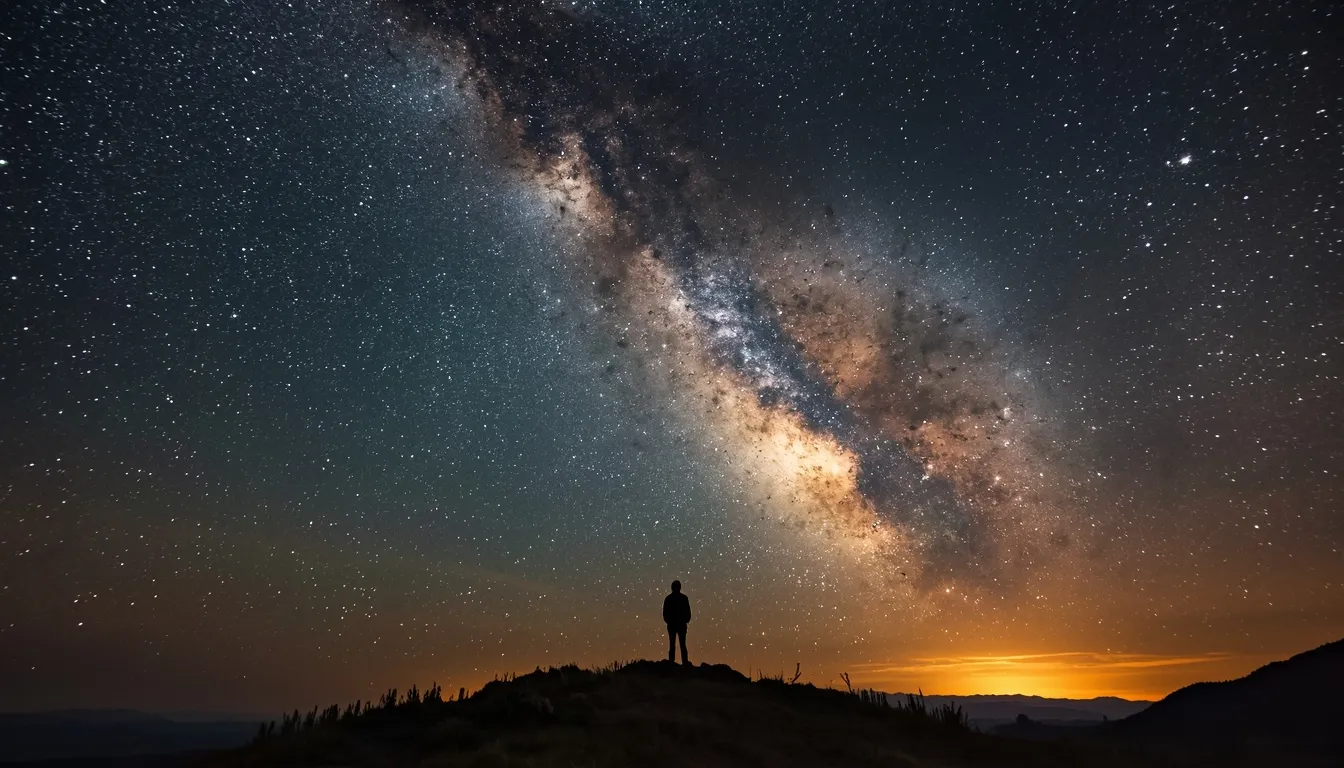
But a worldview is more than an inventory. It is also a stance. Two people can stand on the same clifftop and one feels nothing while the other feels their chest open. Neither is wrong about the cliff. The pantheist is simply refusing to treat that second feeling as a glitch. Awe, gratitude, the sense of belonging to something vast: pantheism says these are accurate responses to reality, not leftovers from religion to be embarrassed about.
The word "God" is where most of the friction lives. Atheists reasonably ask why you would keep a word so loaded with baggage. Pantheists answer that no other word does the work. "Nature" sounds like a documentary. "The universe" sounds like physics. Spinoza's Deus sive Natura, God or Nature, said with one breath, captures both the facts and the feeling. You do not have to use the word. Plenty of pantheists prefer not to. But you should understand why others do.
Then there is the practical side. Atheism tells you what not to believe and then leaves the room. That is fine if you already have a rich life; many atheists do. But a lot of people who leave religion notice a gap where the ritual and reverence used to be. Pantheism is one of the few naturalistic worldviews that speaks directly to that gap, without asking you to believe anything you know is false.
Which one sounds like you?
If your main feeling about religion is relief at having escaped it, and you have no appetite for words like sacred or reverence, you are probably an atheist and content to be one. Nothing here is trying to change that.
If you left belief behind but still catch yourself moved to the point of silence by the night sky, a forest after rain, or the fact that you exist at all, and you want a worldview that treats that as data rather than sentiment, you may already be a pantheist. Many people are for years before they hear the word.
Questions people ask
Can a pantheist be an atheist? +
Yes, and many are. Naturalistic pantheists do not believe in any personal god, which makes them atheists in the strict sense. What they add is a stance toward the universe: reverence rather than indifference. Some call themselves both. Others avoid the word atheist because it describes what they lack rather than what they have.
Is pantheism just atheism with a spiritual vocabulary? +
On the facts, the two positions are identical. On the response to those facts, they differ, and that response shapes how a person lives. Pantheism claims that awe and reverence are correct reactions to nature, and it builds practice around them. Atheism makes no such claim and implies no practice. Whether that makes pantheism "more" than atheism or just a different flavour is a matter of taste.
Do pantheists pray? +
Not in the sense of asking something for favours. There is no one to ask. Some pantheists sit quietly in gratitude, or speak their thanks out loud outdoors, and call that prayer. It is closer to contemplation than petition. The universe is not listening; the pantheist is.
What did Einstein actually believe? +
Einstein rejected a personal God plainly and repeatedly, which made him an atheist by most definitions. He also said he believed in "Spinoza's God, who reveals himself in the lawful harmony of the world." That is the pantheist position in one sentence: no one behind the universe, and the universe itself worthy of the word. He disliked being called an atheist because he thought it missed the reverence.
Want the long version? Pantheism vs Atheism: the long read
Keep comparing
Pantheism vs Agnosticism
"I don't know" versus "I know, and it is everything."
Pantheism vs Deism
The clockmaker who left versus the clock that is the maker.
Pantheism vs Theism
A God above the world versus a God that is the world.
Spirituality without God
What is left when belief goes, and why it is a lot.