Pantheism vs Taoism
The Tao that can be named is not the eternal Tao. Pantheists named it anyway.
Of all the traditions compared on this site, Taoism is the one pantheists most often say feels like home. The Tao Te Ching, written down around 400 BCE and attributed to Laozi, describes a Way that gives rise to all things, runs through all things, and cannot be separated from them or fully put into words. There is no creator. There is no one to pray to. There is only the pattern of nature, and the question of how to live in step with it.
Swap "Tao" for "God" and you have Spinoza with better poetry. Both say the ultimate reality is not a being but the way things are. Both distrust the human urge to impose. Both find the sacred in water, in mountains, in the turning of the seasons rather than in temples. Neither requires you to believe anything you cannot see.
The difference is subtle but real, and it is about what you do with the vision. Pantheism tends to look up: reverence, awe, gratitude for the vast whole. Taoism tends to look down at your feet: how do you move through this whole without fighting it? One is a stance. The other is a technique.
What they share
- ✓No creator god; the source of things is not a person
- ✓The ultimate reality is nature itself, not something behind it
- ✓Reverence for the natural world as the plainest expression of the sacred
- ✓Suspicion of dogma, priesthood and elaborate doctrine
- ✓The self as part of the flow rather than standing apart from it
- ✓Simplicity, attention and quiet as central to a good life
Where they part ways
Naming
The Tao Te Ching opens by saying the Tao cannot be named, and then spends eighty-one chapters gesturing at it anyway. Pantheism names it plainly: the universe, nature, God. Taoists would say the naming loses something. Pantheists would say a name lets you talk to your neighbour about it. It is a real difference in temperament, not just style.
Reverence versus alignment
Pantheism's central emotion is awe: the universe is vast and you belong to it. Taoism's central skill is wu wei, acting without forcing, moving with the grain of things like water finding its way downhill. A pantheist stands on a hill and feels it. A Taoist walks down the hill without stumbling. Both love the hill.
Philosophy or religion
Philosophical Taoism, the Tao Te Ching and the Zhuangzi, is closest to pantheism. But religious Taoism, which developed over the following centuries, has gods, immortals, temples, alchemy, priests and ritual. That Taoism is polytheistic and looks nothing like Spinoza. When people say Taoism is pantheist they nearly always mean the philosophical books, not the temples.
Immortality
Religious Taoism pursued literal immortality through alchemy, breath and diet, and later spiritual immortality of a refined self. Pantheism has no interest in either. You are a wave; the wave falls back into the sea; that was always the arrangement. Philosophical Taoism, especially the Zhuangzi, is closer to this: it treats death as one more transformation among many, to be met without fuss.
What counts as knowledge
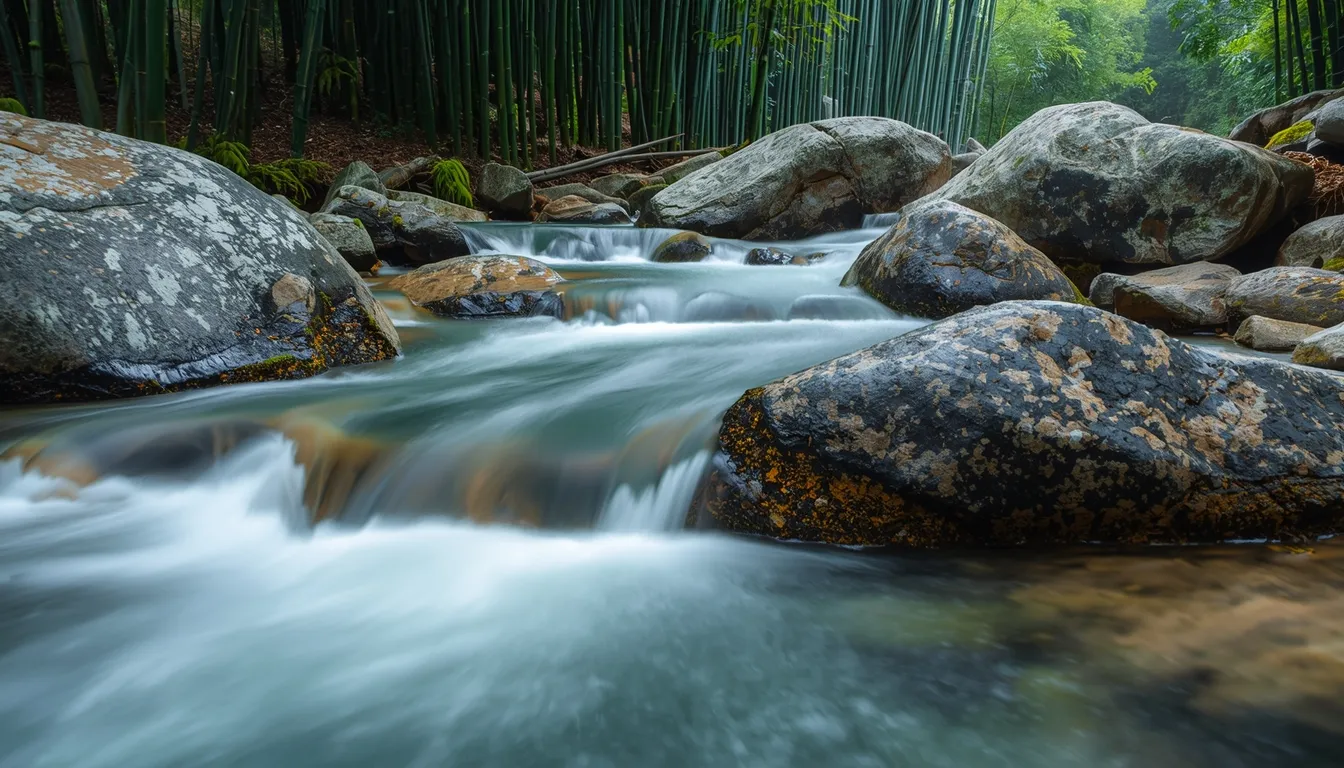
Pantheism, in its modern naturalistic form, leans on science. The universe is what physics and biology describe, and reverence is the response to that. Taoism is older than science and somewhat wary of analysis; it prefers knowing by doing, the carpenter's knowledge, the swimmer's. A pantheist reads about the cosmos. A Taoist watches the river until the watching is the knowing.
Side by side
| Question | Pantheism | Taoism |
|---|---|---|
| Ultimate reality | The universe, named as God or nature | The Tao, the Way, which cannot be fully named |
| Creator? | No | No |
| Gods | None | None in the philosophy; many in religious Taoism |
| Central response | Reverence and awe | Alignment (wu wei), effortless action |
| Knowledge | Science plus direct experience | Intuition and practice; wary of analysis |
| Death | Return to the whole | Transformation; religious Taoism sought immortality |
| Core texts | None; Spinoza's Ethics is nearest | Tao Te Ching, Zhuangzi |
Is Taoism pantheistic?
Philosophical Taoism is about as close to pantheism as any tradition gets without using the word. Chapter 25 of the Tao Te Ching describes the Tao as that which existed before heaven and earth, flows everywhere, and is the mother of all things, yet it is never treated as a person or a maker. Chapter 34 says the great Tao flows everywhere, to the left and to the right, and all things depend on it, and it does not lord it over them. Strip the archaic phrasing and that is a description of nature as self-organising whole: pantheism's core claim.
The Zhuangzi goes further and is funnier about it. Asked where the Tao is, Zhuangzi says it is in the ant, in the weeds, in the tiles, in the excrement. His friend is offended. Zhuangzi shrugs: there is nowhere it is not. This is pantheism without a trace of solemnity, and pantheists could learn from the tone.
Where scholars hesitate is the word "God." Taoism has no divine to identify with the universe, so calling it pantheist imports a Western frame. Some prefer "naturalism" or "cosmological monism." The Taoist would probably say the argument is exactly the kind of naming the Tao Te Ching warned about. Fair. But if pantheism means "the sacred is nature and nothing beyond it," philosophical Taoism qualifies, and it got there two thousand years before Europe.
What a pantheist can take from Taoism is the missing half of the practice. Pantheism is strong on why the world deserves reverence and weak on how to move through it. Taoism has spent millennia on the how: the water that wears down stone by yielding, the tree that survives the storm by bending, the ruler who governs best by governing least. A pantheist who reads the Tao Te Ching often finds that their awe acquires a method. That is not a small gift.
Which one sounds like you?
Taoism fits if your instinct in the face of the vast is not to marvel but to adjust, if you would rather learn to move with the current than admire it from the bank, and if the idea of naming the ultimate makes you uneasy.
Pantheism fits if you want to say plainly what you revere, if science is part of how you know the world rather than a distraction from it, and if your first response to a mountain is to stop and stare. Most pantheists end up reading the Tao Te Ching anyway. Most Taoists would recognise a pantheist on sight.
Questions people ask
Is Taoism pantheistic? +
Philosophical Taoism, found in the Tao Te Ching and Zhuangzi, is close to pantheism: the Tao is the source and substance of all things, is not a person or creator, and cannot be separated from nature. Religious Taoism, with its gods, immortals and temples, is polytheistic and not pantheist. When people call Taoism pantheistic they mean the philosophy.
What is the difference between the Tao and God? +
The Tao is the Way: the pattern and source of nature, impersonal and unnameable, with no will or intention. The theistic God is a person who creates and commands. The pantheist God is closer to the Tao than to theism, since both identify the ultimate with nature itself. The main difference is that pantheists are willing to name it and Taoists are suspicious of naming.
Can you be a Taoist and a pantheist? +
Easily. The two share nearly all their metaphysics: no creator, nature as the ultimate, the self as part of the flow. Many Western pantheists treat the Tao Te Ching as a core text. The only friction is vocabulary; a Taoist might wince at the word God, and a pantheist might find "the Tao cannot be named" a little coy.
What does the Tao Te Ching say about nature? +
That it is the model. Water, which yields yet wears away stone, is the book's favourite image. The sage acts like nature: without forcing, without display, without claiming credit. Heaven and earth are described as impartial, treating all things equally. It is one of the earliest sustained arguments that the good life is the one aligned with how nature actually works.