On December 21st (or 22nd, depending on your location), something remarkable happens. The Earth's axial tilt reaches its maximum, the Northern Hemisphere experiences its shortest day, and then - slowly, imperceptibly at first - the light begins to return.
Humans have marked this moment for at least 10,000 years. Stonehenge aligns with it. Ancient Romans celebrated Saturnalia. Norse peoples burned Yule logs. Christians placed Christmas nearby. The winter solstice is perhaps humanity's oldest shared celebration.
For pantheists, the solstice offers something profound: a chance to honor the cosmos without supernatural beliefs, to participate in an ancient tradition grounded in astronomical reality.
Why the Solstice Matters
The winter solstice isn't a myth or a metaphor. It's a real astronomical event - the moment when the Earth's pole reaches its maximum tilt away from the Sun. This creates the longest night and shortest day of the year.
For our ancestors, this was life and death. Would the sun return? Would spring come? Would they survive the cold months ahead? The solstice was a turning point - the promise that darkness would not last forever.
We no longer fear the sun won't return. But the symbolism remains powerful: light emerging from darkness, hope in difficult times, the cyclical nature of existence. These aren't supernatural claims - they're genuine patterns in nature that resonate with human experience.
A Pantheist Solstice Celebration
You don't need to believe in gods or magic to mark the solstice meaningfully. Here are some ways pantheists celebrate:
Watch the Sunrise or Sunset
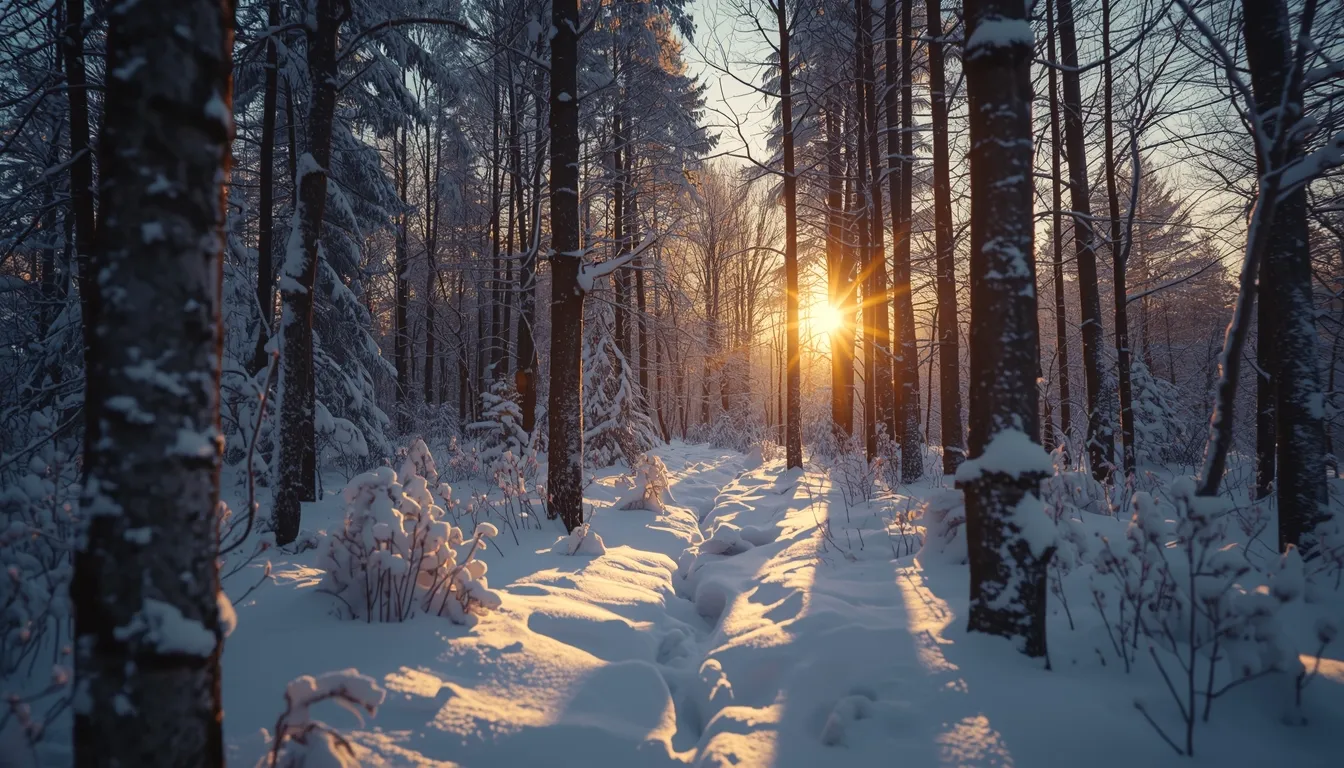
On the solstice, take time to actually witness the sun. Watch it rise late or set early. Notice where it appears on the horizon - its southernmost point of the year. You're watching the same event humans have observed for millennia, now understood through the lens of planetary mechanics.
Embrace the Darkness
Instead of fighting the long night, lean into it. Turn off screens. Light candles. Sit in the dark and let your eyes adjust. Our ancestors lived with darkness in ways we've forgotten. The longest night is an invitation to slow down, reflect, and rest.
Gather with Others
The solstice has always been communal. Invite friends for a meal. Share stories. Build a fire if you can. Human connection matters most when the world feels cold and dark.
Reflect on Cycles
The solstice marks a turning point - not just in the year, but symbolically in our lives. What darkness are you moving through? What light is beginning to return? The cosmos doesn't care about your problems, but its patterns can still offer perspective.
Connect with Nature
Bundle up and go outside. Notice how the natural world responds to winter - the bare trees, the quiet, the way sound carries differently in cold air. Even in dormancy, life persists. The seeds are waiting. The buds are forming. Spring is already being prepared.
The Science Makes It More Sacred, Not Less
Some people think scientific understanding diminishes wonder. Pantheists disagree.
Knowing that the solstice results from Earth's 23.4-degree axial tilt doesn't make it less meaningful - it makes it more so. You're not just observing a local event; you're participating in planetary mechanics, feeling the effects of forces that shaped the entire solar system.
The same physics that creates our seasons also creates seasons on Mars, tilts Saturn's rings toward and away from the sun, and governs the behavior of exoplanets orbiting distant stars. When you mark the solstice, you're celebrating something universal.
Creating Your Own Traditions
Pantheism doesn't come with prescribed rituals. You get to create traditions that resonate with you. Some ideas:
- Solstice journal - Write reflections on the year ending and intentions for the year ahead
- Longest night feast - Prepare a special meal with seasonal foods
- Candle lighting - Light a candle at sunset and let it burn through the night
- Nature walk - Take a winter hike, noticing how the landscape has changed
- Stargazing - The long night means more time to observe the cosmos
- Reading - Share poems or passages about light, darkness, and renewal
- Donation - Give to those who struggle most in winter months
The Return of the Light
After the solstice, the days begin to lengthen. At first, you won't notice - just seconds of additional daylight. But by late January, the change becomes perceptible. By February, unmistakable. The light returns, as it always has, as it always will (for the next few billion years, anyway).
This isn't faith. It's physics. And somehow, that makes it more comforting, not less. The universe operates according to principles we can understand. The patterns are reliable. The light will return - not because we prayed for it, but because that's how orbits work.
There's something deeply reassuring about that. In a world full of uncertainty, the solstice is a reminder that some things are dependable. The Earth will keep turning. The seasons will keep cycling. We are part of something vast and ancient and ongoing.
Happy Solstice
However you choose to mark it - or even if you don't mark it at all - the solstice will happen. The Earth will reach that point in its orbit, the Northern Hemisphere will begin its slow turn back toward the sun, and another cycle will complete.
You're made of atoms forged in stars, standing on a planet hurtling through space, experiencing the effects of axial tilt that was set in motion billions of years ago. That's not nothing. That's everything.
Happy solstice. May your longest night be peaceful, and may you find meaning in the returning light.