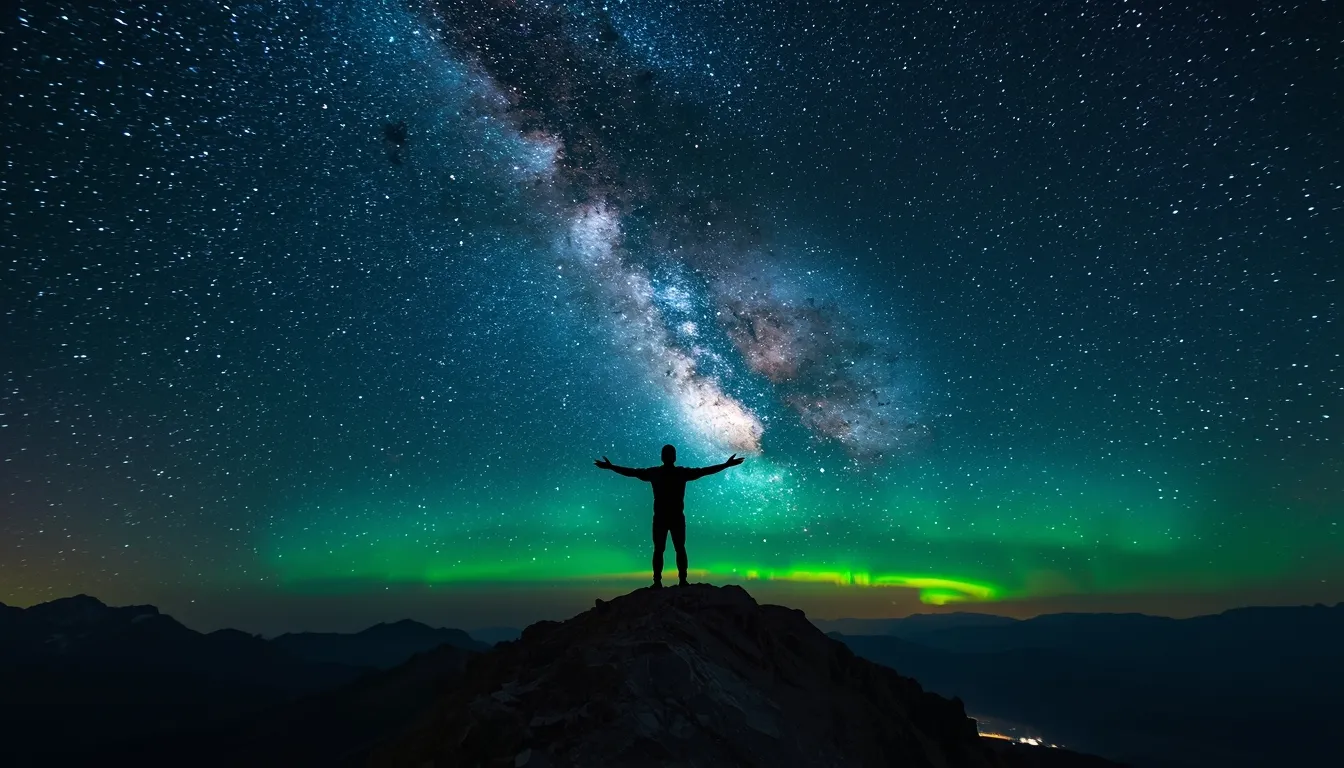

Pantheism is the belief that God and the universe are one and the same. The word comes from Greek: "pan" (all) + "theos" (god). In pantheism, God is not a separate being who created the world - God IS the world.
If you've ever felt a deep sense of awe looking at the night sky, or felt connected to something larger while walking through a forest, you've touched what pantheists consider sacred. The difference is that pantheists don't see these feelings as pointing to something beyond nature - they see nature itself as the ultimate reality worthy of that reverence.
The Core Idea of Pantheism
Imagine looking at a forest, an ocean, or the night sky. A pantheist doesn't see these as things God made - they see them as expressions of God, as God itself. Everything that exists is part of one divine whole.
This isn't metaphor or poetry. It's a literal claim: the universe itself is what people have been reaching for when they use the word "God."
Think about it this way: traditional religions say God created the universe, like an artist creating a painting. Pantheism says the universe IS God - there's no separation between creator and creation. The painting and the artist are the same thing.
What Pantheists Believe
While pantheists vary in their specific views, most share these core beliefs:
- The universe itself is divine and worthy of reverence - not because something made it sacred, but because existence itself is sacred
- There is no supernatural realm separate from nature - what you see is what there is, and that's enough
- We are part of God, not separate from it - you are the universe experiencing itself
- Science reveals the nature of the divine - every discovery about how the cosmos works is a glimpse of what we truly are
- Death is a return - not to a heaven or hell, but to the cosmic process that created you
This worldview has profound implications. If everything is part of one divine whole, then harming nature is harming the sacred. If you are part of God, then you already belong - there's nothing to earn, no salvation to achieve. You're already home.
Famous Pantheists Throughout History
Pantheism has attracted some of history's greatest minds. Albert Einstein famously said he believed in "Spinoza's God" - the God of pantheism. When asked if he believed in God, Einstein clarified that he believed in a God who reveals himself in the harmony of all that exists, not a God who concerns himself with human affairs.
"I believe in Spinoza's God, who reveals himself in the lawful harmony of all that exists, but not in a God who concerns himself with the fate and the doings of mankind."
- Albert Einstein
Other notable pantheists include:
- Baruch Spinoza - The 17th-century philosopher who developed modern pantheism in his work Ethics
- Walt Whitman - American poet whose Leaves of Grass celebrates the divine in all things
- Carl Sagan - Astronomer who spoke of the cosmos with reverence and wonder
- Ralph Waldo Emerson - Transcendentalist who saw nature as the embodiment of spirit
- Alan Watts - Philosopher who bridged Eastern and Western thought with pantheistic themes
You can explore more about these thinkers in our article on famous pantheist thinkers throughout history.
How Pantheism Differs from Other Worldviews
Understanding pantheism often becomes clearer when you see how it compares to other beliefs:
Pantheism vs Traditional Religion
Traditional religions like Christianity, Islam, and Judaism believe in a personal God who exists separately from creation, who has a will, answers prayers, and judges human behavior. Pantheism rejects this entirely. The pantheist God doesn't listen, doesn't judge, doesn't intervene - because "God" is simply another word for the totality of existence.
Learn more: Pantheism vs Christianity
Pantheism vs Atheism
Both pantheism and atheism reject a personal, intervening God. But pantheism maintains a sense of the sacred - the universe is worthy of reverence and awe. Atheism typically avoids such language. Some call pantheism "atheism that kept the sense of wonder."
Learn more: Pantheism vs Atheism
Pantheism vs Panentheism
Panentheism says God includes the universe but also extends beyond it - the universe is "in" God, but God is more than the universe. Pantheism says God and the universe are identical - nothing more, nothing less.
Learn more: Pantheism vs Panentheism
Why Does Pantheism Matter?
For many people, pantheism offers something neither traditional religion nor pure atheism provides: a sense of the sacred without supernatural beliefs. You can feel awe at the universe, reverence for nature, and connection to something larger - all while staying grounded in what's actually real.
Pantheism matters because it answers deep human needs:
- Meaning - You are the universe becoming aware of itself. That's not nothing - that's everything.
- Belonging - You're not a stranger in a strange land. You're made of this place. You belong here.
- Ethics - If everything is interconnected, harming others is harming yourself. Environmental care becomes sacred duty.
- Death - You came from the cosmos and will return to it. The atoms that make you will go on to make other things. Nothing is truly lost.
How to Practice Pantheism
Pantheism doesn't require rituals, churches, or special practices. But many pantheists find certain activities help them connect with their worldview:
- Time in nature - Walking, hiking, gardening, or simply sitting outside
- Stargazing - Contemplating your place in the cosmos
- Learning science - Every discovery reveals more about what you are
- Meditation - Quieting the mind to feel connection with the whole
- Gratitude - Appreciating existence itself, not to anyone, but for the sheer fact of being
Explore more: Simple Daily Practices for Pantheists
Is Pantheism Right for You?
Pantheism might resonate with you if:
- You feel awe in nature but don't believe in a personal God
- You're "spiritual but not religious" and looking for a framework
- You love science but still want a sense of the sacred
- You've left traditional religion but miss the sense of meaning and connection
- You want spirituality grounded in reality, not supernatural claims
There's no membership, no conversion, no requirements. If the idea that you are the universe experiencing itself resonates with you - you're already a pantheist.
The universe is not something you look at. It's something you are.
Frequently Asked Questions
What is pantheism in simple terms?
Pantheism is the belief that God and the universe are the same thing. Everything that exists - stars, trees, people, atoms - is part of one divine whole. There's no separate creator; the creation itself is what's sacred.
Do pantheists believe in God?
Yes and no. Pantheists believe in "God" as a word for the universe, nature, or the totality of existence. They don't believe in a personal God who created the world, answers prayers, or judges human behavior. Learn more: Do Pantheists Believe in God?
Is pantheism a religion?
It can be either a religion or a philosophy, depending on how you practice it. Some pantheists have rituals, communities, and spiritual practices. Others hold it purely as an intellectual position. Learn more: Is Pantheism a Religion?
What happens when you die according to pantheism?
Pantheists believe death is a return to the cosmic process. Your consciousness ends, but the matter and energy that made you continues in other forms. You came from the universe and return to it. Nothing is truly lost - just transformed. Learn more: The Pantheist View of Death
Can you be a pantheist and believe in science?
Absolutely. Pantheism embraces science completely. There's no conflict because pantheism makes no supernatural claims. Scientific discoveries reveal more about the nature of the divine - which is simply the nature of reality. Learn more: Pantheism and Science
Ready to Explore Further?
Our free guide to pantheism covers everything - a comprehensive introduction to this worldview, with practices, reflections, and resources for your journey.
Get the Free Guide