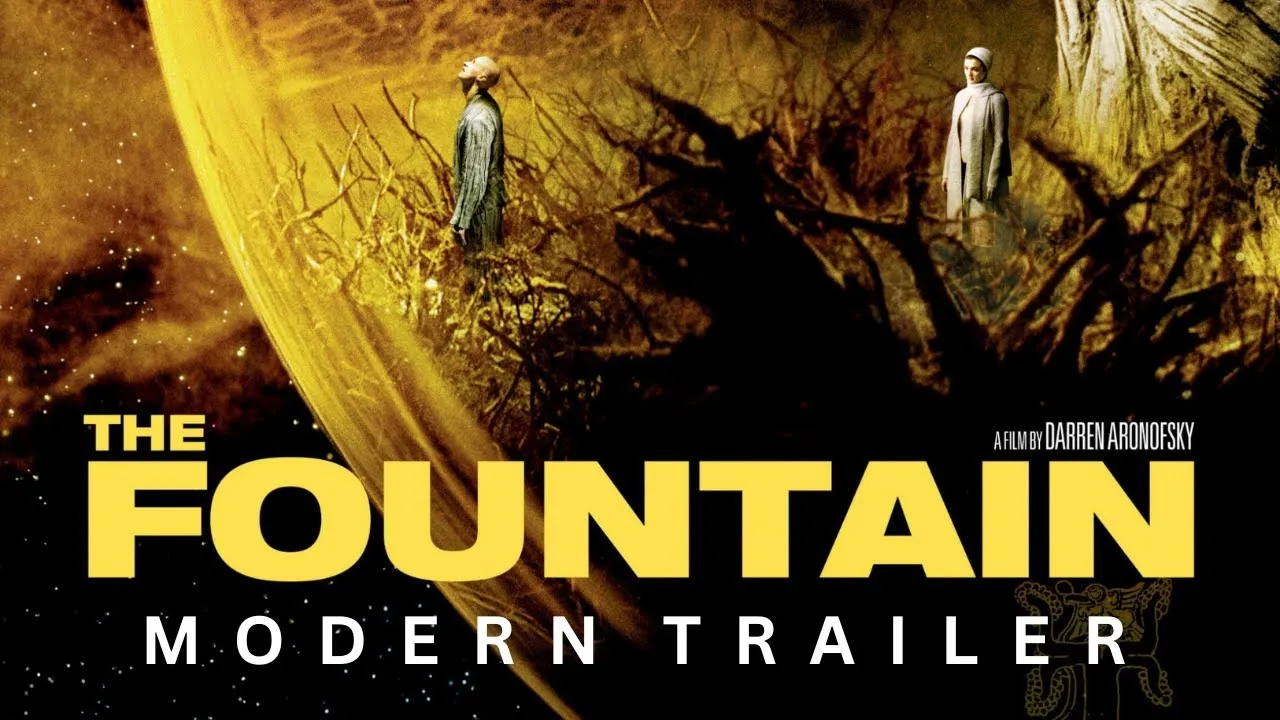
A conquistador searches for the Tree of Life in the jungles of Central America. A scientist desperately seeks a cure for his dying wife. An astronaut travels through space in a bubble with a glowing tree. Three stories, three timelines, one truth: death is not the end. It's transformation.
The Fountain (2006) is Darren Aronofsky's most divisive film - a visual poem about mortality that some found pretentious and others found transcendent. But beneath its layered narrative and stunning imagery lies one of cinema's most profound explorations of pantheist themes: that we're part of an eternal cycle, that death feeds new life, and that accepting our mortality is the path to peace.
Note: This article discusses the film's structure and ending in detail.
Three Stories, One Truth
The Fountain weaves together three narratives across a thousand years. In 16th-century Spain, conquistador Tomás (Hugh Jackman) is sent by Queen Isabel (Rachel Weisz) to find the Tree of Life and save Spain from the Inquisition. In the present day, neuroscientist Tommy Creo desperately searches for a cure as his wife Izzi dies of brain cancer. In the far future, an astronaut named Tom floats through space in a transparent sphere with a dying tree, traveling toward a nebula called Xibalba.
Are these three different people, or three versions of the same soul? Reincarnation? Parallel universes? The film refuses to explain. What matters is the pattern: in each timeline, a man tries to conquer death, and in each timeline, he must learn to accept it instead.
This structure itself is pantheist - circular rather than linear, suggesting that existence moves in cycles rather than progressing toward some final endpoint. Birth, death, rebirth. Not as literal reincarnation, but as the pattern of reality itself.
Tommy and Izzi: The Present Story
The emotional core of the film is Tommy and Izzi's relationship. Izzi is dying of a brain tumor. Tommy, a brilliant researcher, is obsessed with finding a cure - testing compounds from a tree in Guatemala, working endless hours in the lab, convinced he can save her if he just works hard enough.
But Izzi has already accepted her death. She's writing a book called "The Fountain" about the conquistador's quest, and she wants Tommy to finish it after she's gone. She wants to talk about death, to prepare, to say goodbye. Tommy refuses. He can't accept it. He won't accept it.
"I'm going to die."
"No, you're not."
"Together we will live forever."
This exchange captures the film's central tension. Izzi sees death as transformation - "together we will live forever" doesn't mean their bodies won't die, but that their atoms will continue, recycled into new forms, part of the eternal dance of existence. Tommy hears it as a promise he can keep through science, through willpower, through refusing to let go.
For pantheists, Izzi's perspective resonates. We don't believe in personal immortality or an afterlife where consciousness continues. But we do recognize that the matter and energy that compose us doesn't disappear - it transforms. Death isn't annihilation. It's returning to the universe, becoming part of something else.
The Tree of Life
The tree is the film's central symbol, appearing in all three timelines. In the conquistador story, it's the biblical Tree of Life in the Garden of Eden, hidden in a Mayan temple. In the present, it's a tree from Guatemala whose bark contains compounds that reverse aging in primates. In the future, it's a dying tree that Tom tends as he travels through space.
Trees are perfect symbols for pantheist thinking. They're rooted in earth but reach toward sky. They transform sunlight into matter through photosynthesis - literally creating life from energy. They die and decompose, feeding new growth. They're individuals and also part of a larger ecosystem, connected through root networks and fungal webs.
The film's tree glows with golden light, suggesting something sacred. But it's not supernatural - it's nature itself, recognized as holy. This is the pantheist move: seeing the divine in what actually exists rather than projecting it onto an imagined realm beyond nature.
Xibalba: The Dying Star
In Mayan cosmology, Xibalba is the underworld - the place of death and transformation. In the film, it's a nebula - the remnant of a dying star, about to explode and create new elements, new possibilities, new worlds.
The astronaut Tom is traveling toward Xibalba, believing that if he can reach it before the tree dies, the tree will be reborn in the star's explosion and he'll achieve immortality. It's the same quest as the conquistador's, the same desperation as the scientist's - the refusal to accept death.
But Xibalba represents something else: the truth that death creates life. When massive stars die, they explode as supernovae, scattering heavy elements across space. Carbon, oxygen, nitrogen, iron - all the elements necessary for life - are forged in dying stars and distributed through their deaths.
We are literally made of stardust. Not metaphorically. The atoms in your body were created in stellar furnaces billions of years ago, released when those stars died, incorporated into new stars and planets, and eventually into you. Your existence required countless deaths - stars, planets, organisms, all transforming into new forms.
This is what Xibalba symbolizes: death as the source of life, destruction as creation, endings as beginnings.
The Conquistador's Quest
In the 16th-century storyline, Tomás fights his way through the jungle, battling Mayans who guard the Tree of Life. He's driven by devotion to his queen and the promise of eternal life together. When he finally reaches the tree and drinks its sap, he expects immortality.
Instead, he explodes into flowers. The tree's gift isn't eternal life - it's rapid transformation. His body becomes part of the jungle, feeding new growth, returning to the cycle. He sought to escape death and instead became it, became life, became the process itself.
This sequence is visually stunning and philosophically profound. The conquistador's body doesn't disappear - it transforms into something beautiful. Death isn't annihilation. It's metamorphosis.
For pantheists, this is how death actually works. Your body will decompose, but its atoms will persist, becoming part of soil, plants, animals, air, water. You won't experience this transformation - consciousness ends - but the matter that was you continues in new forms. You return to the universe that made you.
Tommy's Breakthrough
In the present timeline, Tommy finally makes a breakthrough - the tree compound does reverse aging in his test subjects. But he's too late. Izzi dies before he can save her.
Devastated, Tommy finally reads the book Izzi left him. It ends with the conquistador reaching the tree, but the final chapter is blank - she left it for him to finish. And in finishing it, he has to confront what she was trying to tell him all along.
The film suggests that the future timeline is Tommy writing that final chapter - imagining himself as the astronaut, finally understanding what Izzi meant. He has to complete the journey himself, has to reach Xibalba, has to accept death before he can finish her story.
Acceptance at Xibalba
In the climactic sequence, the astronaut Tom reaches Xibalba as the star begins to explode. The tree is dying. He's failed. And in that moment of failure, he finally lets go.
He stops fighting. He accepts death - his own, Izzi's, the tree's, the star's. And in accepting it, he experiences something like transcendence. Not supernatural salvation, but the peace of finally surrendering to what is.
"Death is the road to awe."
This line, spoken by Izzi earlier in the film, becomes the key. Death isn't the enemy. It's the gateway to understanding how remarkable existence is. When you accept that you're temporary, that everything is temporary, you can finally appreciate the astonishing fact that anything exists at all.
The star explodes. Tom and the tree are consumed in golden light. And in the present timeline, Tommy plants a seed over Izzi's grave - the beginning of new life, fed by her death, the cycle continuing.
The Ring: Symbol of Eternity
Throughout the film, Tom wears a ring - Izzi's wedding ring. In the future timeline, he's tattooed a ring around his finger for each year of the journey. Circles within circles, symbols of eternity.
But the film's understanding of eternity isn't about lasting forever as an individual. It's about being part of something that continues. The ring is circular - no beginning, no end - like the cycles of nature, like the transformation of matter and energy, like the universe itself.
When Tom finally accepts death, he removes the ring. Not because love ends, but because he no longer needs to hold on. He can let Izzi go, let himself go, trust the process of transformation.
Visual Poetry
The Fountain is one of the most visually stunning films ever made. Aronofsky used macro photography of chemical reactions to create the space sequences - actual physical processes, not CGI, giving them an organic quality that reinforces the film's themes.
The golden light that suffuses the film isn't supernatural - it's the light of stars, of life, of energy transforming. The bubble the astronaut travels in is transparent, vulnerable, temporary - like consciousness itself, a brief window of awareness floating through the cosmos.
Every image reinforces the pantheist vision: we're part of nature, not separate from it. The sacred isn't elsewhere - it's here, in matter and energy, in the processes of transformation that make existence possible.
Clint Mansell's Score
The film's soundtrack, composed by Clint Mansell and performed by the Kronos Quartet with Mogwai, is essential to its impact. The main theme, "Death is the Road to Awe," builds from quiet strings to overwhelming crescendo - a musical representation of accepting mortality and finding beauty in it.
The music doesn't try to comfort or reassure. It sits with grief, with loss, with the overwhelming nature of existence. And then it transforms that weight into something transcendent - not by denying death, but by embracing it as part of the pattern.
Why the Film Divided Audiences
The Fountain was a commercial failure and received mixed reviews. Some found it pretentious, confusing, or emotionally manipulative. Others found it profound and beautiful. Why the divide?
The film refuses easy answers. It doesn't explain its structure. It doesn't promise that everything will be okay. It doesn't offer the comfort of an afterlife or the reassurance that death has a purpose beyond itself.
For viewers expecting a traditional narrative with clear explanations, this is frustrating. But for those willing to sit with ambiguity, to feel rather than understand, the film offers something rare: an honest confrontation with mortality that doesn't flinch.
Pantheism often faces similar resistance. People want to be told that death isn't real, that consciousness continues, that we'll see our loved ones again. Pantheism can't offer those comforts. What it offers instead is the truth: you're part of something vast and eternal, even though you personally are temporary. That's harder to accept, but it's real.
The Mayan Connection
The film draws heavily on Mayan cosmology, particularly the Popol Vuh - the Mayan creation myth. In this story, the Hero Twins descend to Xibalba, the underworld, and through their deaths and resurrections, they defeat the lords of death and enable the creation of humanity.
Izzi is reading the Popol Vuh throughout the film. She sees the pattern: death isn't the end of the story. It's part of the story. The heroes die and are reborn as the sun and moon, becoming part of the cosmos itself.
This resonates with pantheist thinking. We don't literally reincarnate, but the matter and energy that compose us do continue, transformed into new forms. In a sense, we do become part of the sun and moon and stars - not as conscious beings, but as the stuff of existence itself.
The Seed and the Tree
The film ends with Tommy planting a seed over Izzi's grave. It's a simple image, but it contains everything the film has been saying: death feeds life. Izzi's body will decompose, becoming nutrients for the tree. The tree will grow, transform sunlight into matter, create oxygen, provide shelter for birds and insects.
She won't experience this. She's gone. But the atoms that were her continue, part of new life, new patterns, new expressions of the universe's creativity.
This is the pantheist understanding of death. It's not comforting in the way an afterlife would be. You don't get to continue as yourself. But you do continue as part of the whole, and that's something.
Together We Will Live Forever
Izzi's promise - "together we will live forever" - finally makes sense. Not as individuals, but as part of the eternal process. The atoms that were Izzi and Tommy will scatter, transform, become part of countless other beings and things. In that sense, they will live forever, just not as themselves.
This might seem like cold comfort. But there's something profound in it: you're not separate from the universe. You're a temporary pattern in an eternal dance. When the pattern dissolves, the dance continues. You return to the source.
Lessons for Living
What does The Fountain suggest about how to live, knowing we'll die?
- Be present - Tommy's obsession with curing death makes him miss Izzi's final days. Don't sacrifice the time you have for the illusion of more time.
- Accept what you can't change - Fighting death is natural, but at some point, acceptance brings more peace than resistance.
- See death as transformation - You're not disappearing. You're returning to the universe that made you.
- Find meaning in connection - What matters isn't lasting forever, but loving fully while you're here.
- Trust the process - The universe has been transforming matter and energy for billions of years. Your death is part of that ancient pattern.
A Film That Rewards Patience
The Fountain isn't an easy watch. It's slow, meditative, emotionally intense. It doesn't explain itself. But for those willing to sit with it, to feel it rather than analyze it, it offers something rare in cinema: a genuine meditation on mortality that doesn't look away.
The film trusts its audience to understand through images and music and emotion rather than dialogue. The three timelines blur together because they're all the same story - the human struggle to accept death, told across different contexts.
For pantheists, the film articulates something we often struggle to put into words: death is real, and that's okay. Not because there's an afterlife waiting, but because transformation is beautiful. Because being part of the eternal cycle is enough. Because the universe that made you will continue, and you'll be part of it, just in different forms.
Why This Film Matters
In a culture that treats death as failure, as something to be defeated through technology or denied through religion, The Fountain offers a different vision: death as natural, as necessary, as the source of life's preciousness.
The film doesn't promise easy comfort. It doesn't say everything will be okay. What it says instead is: this is how existence works. You're temporary. Everything you love is temporary. And that's what makes it sacred.
This is the heart of pantheism. The universe isn't arranged for our comfort or designed for our immortality. But it's real, it's here, and we're part of it. That's enough. That's everything.
Watch The Fountain when you're ready to confront mortality honestly. When you need to feel grief fully rather than avoid it. When you want to be reminded that death isn't the enemy - it's part of the pattern.
The film won't make death easier. But it might help you see it differently - not as an ending to be feared, but as a transformation to be accepted. Death is the road to awe.