Somewhere along the way, we got sold the idea that spirituality requires God. A personal one, specifically - a being who created everything, watches over you, and has opinions about your choices. If you don't believe in that, you're supposed to just be... secular. Rational. Done with all the transcendence stuff.
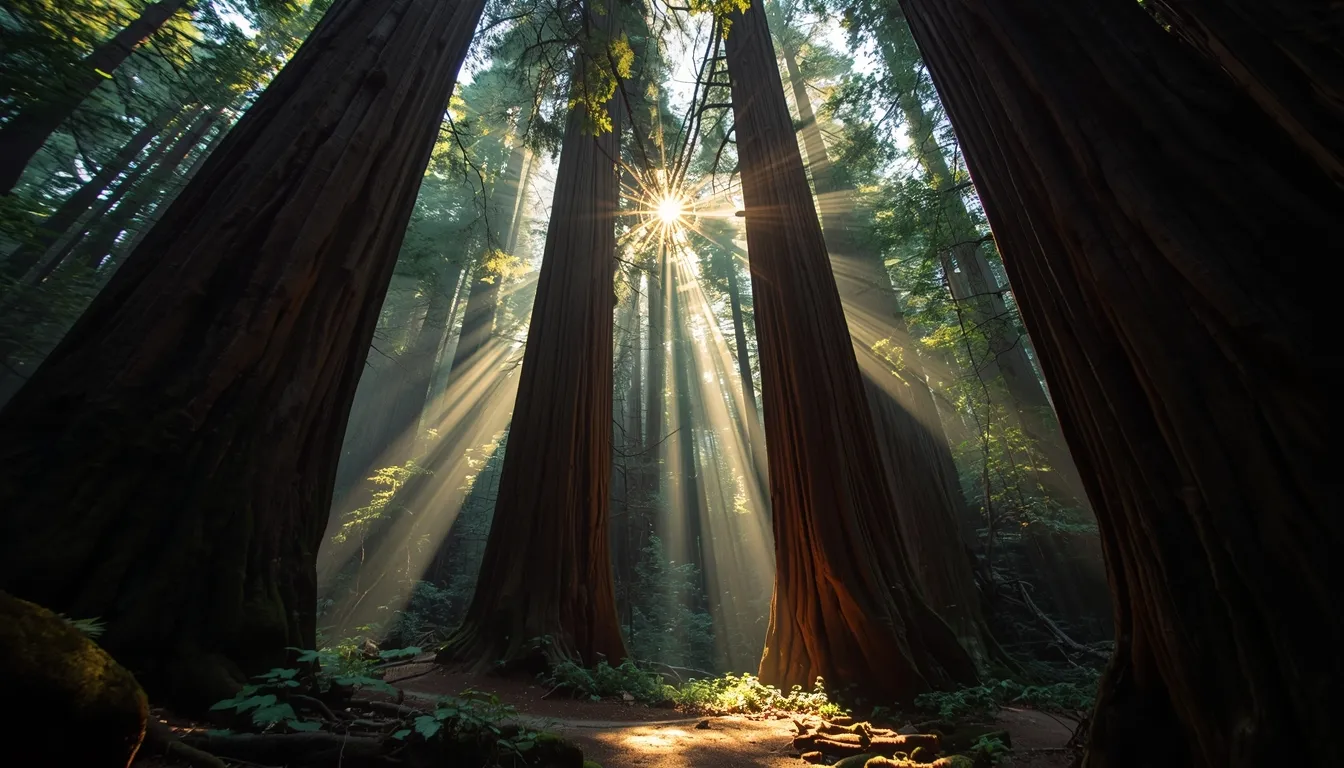
That's a false choice. And millions of people know it. They feel awe watching a thunderstorm. They get chills under a sky full of stars. They sense something when they're deep in a forest that they can't quite articulate. They want language for these experiences that doesn't require pretending to believe in things they don't.
This guide is for them. For you, probably.
What Spirituality Actually Is
Strip away the religious packaging and spirituality is really about a few core human experiences:
- Awe - The feeling of encountering something vast, something that dwarfs your individual concerns
- Connection - Sensing that you're part of something larger than yourself
- Presence - Being fully here, fully awake to the moment
- Meaning - The sense that existence matters, that your life fits into a larger pattern
- Transcendence - Moments where the boundary between self and world dissolves
None of these require a deity. They're built into us - probably because they helped our ancestors survive by fostering cooperation, attentiveness, and bond-forming. But their evolutionary origin doesn't make them less real or less valuable. Hunger evolved too. That doesn't mean food isn't worth savouring.
The Problem With "Just Be Rational"
Pure rationalism tells you: the universe is matter and energy. There's no meaning except what you invent. When you die, you're done. Get over it.
All of that may be technically true. But it's incomplete. It's like describing music as "vibrations in air at various frequencies." Accurate. Missing everything important.
Humans aren't reasoning machines. We're animals who evolved to find patterns, feel connection, and experience wonder. Ignoring those capacities because they don't fit a purely materialist framework is like refusing to enjoy music because you understand acoustics.
You can be rigorous AND reverent. You can accept science AND feel awe. You don't have to pick.
A Framework: Naturalistic Spirituality
Naturalistic spirituality - sometimes called secular spirituality - is simple: direct your spiritual capacities at reality instead of the supernatural.
Instead of worshipping a creator, stand in awe of the creation. Instead of praying to a being, sit in silence with existence. Instead of reading scripture about God's works, read science about nature's actual workings - which are stranger and more beautiful than any holy book imagined.
Pantheism formalises this. It says: the universe itself is what deserves your reverence. Not because someone designed it, but because it exists, and it's extraordinary, and you're part of it.
Practical Spirituality Without God
This isn't just philosophy. It's lived practice. Here's what it looks like day to day:
Morning: Awareness
Before reaching for your phone, take 60 seconds. Feel your breathing. Notice that you exist - that you woke up on a planet hurtling through space at 107,000 km/h. You're a temporary arrangement of atoms that somehow became aware. Just sit with that for a moment.
During the Day: Attention
Spirituality without God is mostly about paying attention. Notice the light changing through the day. Watch how wind moves through trees. Feel the temperature on your skin. Eat something and actually taste it. These aren't "mindfulness exercises" - they're just being alive on purpose instead of on autopilot.
In Nature: Immersion
Get outside. Not to exercise, not to socialise, not to photograph. Just to be there. Sit against a tree and listen. Watch insects. Feel soil. Let the scale of the living world hit you. You share ancestors with every organism you can see. You're family with all of it.
At Night: Wonder
On a clear night, go somewhere dark and look up. Every point of light is a sun - many with their own planets. The light you're seeing left those stars years, decades, or centuries ago. You're looking at the past. And the photons hitting your retina have been travelling since before you were born, just to end their journey in your eye.
If that doesn't stir something in you, nothing will.
When Things Get Hard: Perspective
Religious people pray during difficulty. What do you do? You zoom out. Your problem is real, but you're also a conscious being on a tiny planet in an incomprehensibly large universe. Both things are true at the same time. The zooming out doesn't fix the problem, but it changes your relationship to it. It loosens the grip.
What About Community?
This is where people without religion struggle most. Churches provide built-in community. Where do secular spiritual people find theirs?
- Online communities - Pantheist groups on Discord, Reddit (r/pantheism), and forums
- Nature groups - Hiking clubs, conservation volunteers, wild swimming groups
- Philosophy meetups - Many cities have Stoic or philosophical discussion groups
- Meditation sanghas - Secular meditation groups exist in most areas
- Unitarian churches - Accept all beliefs, including pantheism and non-theism
It takes more effort than showing up at church on Sunday. But the connections you build are chosen, not inherited. There's something to be said for that.
What About Death?
Let's not dodge the hard one. Religion's biggest selling point is the afterlife. What does godless spirituality offer?
Honesty. You probably won't persist as a conscious being after death. Your body will return to the earth and become part of other living things. The atoms that currently make you will continue in other forms for billions of years. The universe will carry on.
That's either terrifying or peaceful, depending on how you look at it. Pantheism leans toward peaceful - you were never separate from the universe to begin with. Death isn't an exit. It's a change of form.
For more on this, read our piece on the pantheist view of death or overcoming the fear of death.
What About Morality?
"Without God, anything is permitted" is one of the worst arguments in philosophy. It ignores the fact that humans evolved moral instincts, that empathy is biological, and that every functional society in history has developed ethical norms regardless of which gods they worshipped.
Pantheist ethics are grounded in interconnection. If everything is part of the same system - if harming the ecosystem harms you, if other people's suffering diminishes the whole - then compassion follows logically. You don't need commandments. You need awareness of how connected everything is.
Is This Really Spirituality?
Some people will say no. They'll say spirituality requires the supernatural by definition. That without a soul, a spirit world, or a God, you're just doing philosophy with nice scenery.
Those people are wrong. Or at least, they're using an unnecessarily narrow definition.
If spirituality means cultivating awe, presence, connection, and meaning - if it means engaging with the deepest questions of existence and letting those questions change how you live - then yes, this is spirituality. The most honest kind. Because it doesn't pretend to have answers it doesn't have. It just stays open to the wonder that's already here.
"The most beautiful thing we can experience is the mysterious. It is the source of all true art and all science." - Albert Einstein
Frequently Asked Questions
Isn't this just atheism?
Atheism is the absence of belief in gods. Naturalistic spirituality is the presence of something - wonder, reverence, practice, meaning-making. You can be an atheist without any spiritual dimension. You can also be an atheist (or pantheist) who cultivates deep spiritual experiences grounded entirely in reality.
Do I need to call myself a pantheist?
Labels are optional. Some people find "pantheist" useful because it gives a name to what they already feel. Others prefer "spiritual naturalist" or just "spiritual but not religious." Use whatever fits. The experience matters more than the label.
What books should I read?
Start with Carl Sagan's The Demon-Haunted World or Pale Blue Dot. Then try Alan Watts' The Book, or Sam Harris' Waking Up. For pantheism specifically, check our recommended reading list.
Can I combine this with meditation?
Meditation is one of the most powerful tools for godless spirituality. It doesn't require any supernatural belief. It's simply training your attention and learning to observe your own mind. Many pantheists meditate daily. See our meditation resources.
What if I feel silly?
You might at first. Years of conditioning tell us that reverence "belongs" to religion. Standing in awe of a sunset can feel performative when you're used to awe being directed at a deity. Give it time. The feeling is genuine. You just need to get used to letting it exist without a religious wrapper.
Start Your Practice
Our free guide includes practical exercises for building a spiritual practice without supernatural beliefs. Nature connection, meditation prompts, and a 30-day reflection journal.
Get the Free Guide