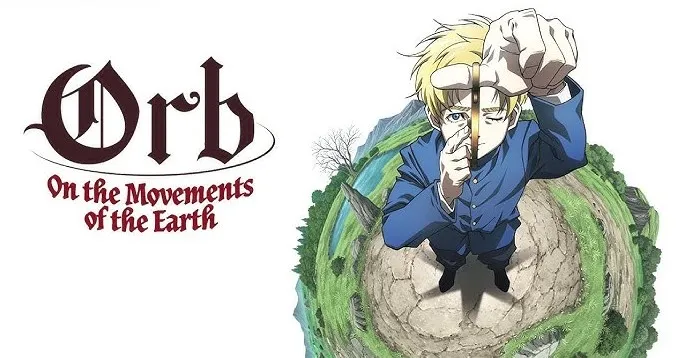
There's an anime about medieval astronomers risking their lives to prove the Earth revolves around the Sun. It sounds niche. It's actually one of the most profound explorations of faith, truth, and the sacred I've seen in any medium - and its themes resonate deeply with pantheism.
Note: This article discusses major plot points from all 25 episodes. If you haven't watched the series yet, consider bookmarking this for later.
Orb: On the Movements of the Earth (Chi. Chikyuu no Undou ni Tsuite) is a 25-episode series that aired 2024-2025, based on Uoto's award-winning manga. Set in 15th-century Europe, it follows multiple generations of characters fighting to prove heliocentrism against the Church's geocentric doctrine.
But this isn't just a story about astronomy. It's a story about what happens when people take the universe seriously - as something worthy of study, of reverence, of sacrifice. And that's exactly what pantheism asks us to do.
The Setup: Truth vs. Power
The anime opens with Rafal, a twelve-year-old prodigy about to enter university. He's brilliant, strategic, and has his whole life planned out - study theology, gain status, play it safe. Then he meets Hubert, a "reformed" heretic who was blinded by the Inquisition's torture but still secretly believes the Earth moves around the Sun.
Hubert needs Rafal's eyes to continue his research. Rafal is skeptical at first - the geocentric model works, more or less. Why risk everything for an alternative? But when he actually does the calculations, when he looks at the data with fresh eyes, he can't unsee it. The heliocentric model is simpler. More elegant. More beautiful.
And that word - beautiful - becomes central to everything.
Hubert's Proto-Pantheism
The most striking moment comes when Rafal challenges Hubert's motives:
Rafal: "Do you wish to deny the existence of God?"
Hubert: "It's the opposite. I do it because I believe in God. Most people believe that this world is an ugly place filled with greed and corruption, while the afterlife is pure and beautiful. But I can't accept that. This world created by God is surely the most beautiful of all."
Read that again. Hubert isn't pursuing science despite his faith - he's pursuing science because of it. He rejects the dualism that separates sacred from profane, heaven from earth. For him, the physical universe IS the divine expression. Understanding it better is an act of worship.
This is essentially pantheist reasoning. The universe isn't a fallen realm we're trying to escape. It's the sacred reality we're trying to understand. And the more we understand it, the more beautiful it becomes.
Beauty as Evidence
One of the anime's recurring themes is the aesthetic argument for truth. Rafal criticizes the Ptolemaic (geocentric) model not just because it's wrong, but because it's ugly:
"It does seem a little too complicated. With this model, every planet has to be calculated separately. The way the movements fail to form a single orderly system... doesn't seem rational. In that sense... it's not very beautiful."
The heliocentric model, by contrast, is elegant. Everything fits. The planets move in orderly patterns around a common center. It's simpler, more unified, more... right.
This resonates with how many pantheists experience scientific discovery. The more we learn about the universe - from quantum mechanics to evolutionary biology to cosmology - the more remarkable it becomes. Scientific elegance isn't separate from spiritual revelation. It IS spiritual revelation.
Oczy and Gras: The Accidental Inheritors
After Rafal's death, the story jumps a decade. We meet Oczy and Gras - two duellists hired to guard a heretic during transport. They're not scholars. They're not believers in anything particular. Gras is just an amateur astronomer who likes tracking Mars.
But when Mars unexpectedly retrogrades - moving backward against the stars in a way the geocentric model can't elegantly explain - Gras is frustrated. The dying heretic offers them a clue: the location of a box containing astronomical research. Before he dies, he passes Rafal's pendant to Oczy.
What follows is one of the anime's most moving arcs. Oczy and Gras retrieve the box, but Gras is lost when a bridge collapses. Oczy, now alone, seeks help from Badeni, a demoted priest willing to study the forbidden contents. They discover Rafal's heliocentric research and begin seeking collaborators - including Jolenta, a scholar's assistant, and Piast, a researcher of the Ptolemaic model.
The beauty of this arc is how ordinary people become carriers of extraordinary truth. Oczy isn't a genius. He's just someone who was handed a pendant and a mystery, and chose to follow it. The knowledge passes not through institutions but through human connection - a dying man's trust, a friend's curiosity, a stranger's willingness to help.
Badeni: Faith That Seeks Understanding
Badeni deserves special attention. He's a priest - demoted, yes, but still a believer. When Oczy brings him the forbidden research, Badeni doesn't recoil. He's curious. He agrees to study it, not despite his faith but alongside it.
This matters because Orb could easily have made all religious characters villains. Instead, Badeni represents something more nuanced: a person of faith who believes that understanding creation is not a threat to the Creator. He sees no contradiction between believing in God and wanting to know how the universe actually works.
In one sense, Badeni embodies the historical reality that many early scientists were religious. Copernicus himself was a Catholic canon. The conflict wasn't really "faith vs. science" - it was institutional power vs. free inquiry. Badeni has faith. What he lacks is loyalty to an institution that would rather control knowledge than discover it.
For pantheists, Badeni's approach resonates. Pantheism doesn't require abandoning the word "God" - it redefines it. The universe itself becomes the sacred. Studying it becomes a form of devotion. Badeni might not use pantheist language, but his willingness to let evidence reshape his understanding of creation is the same impulse that drives pantheist spirituality.
When Badeni is eventually arrested and executed, he dies having completed the theory. His faith didn't prevent him from seeking truth - it motivated him to find it.
Schmit: The Nature Worshipper
Later still, we meet Schmit, captain of the Heretic Liberation Front - a group dedicated to preserving and spreading forbidden knowledge. Schmit is one of the most explicitly spiritual characters in the anime, and his beliefs are fascinating.
Schmit believes in a creator God, but not a personal one. He doesn't follow organized religion because he thinks God is unknowable to humans. Instead, he worships nature directly. There's a memorable scene where he strikes a "worship pose" in the morning sun, greeting the dawn with reverence.
This is remarkably close to naturalistic pantheism - the position that the universe itself is sacred, without supernatural additions. Schmit finds the divine in the natural world, not in scripture or doctrine. He's spiritual but not religious, reverent but not superstitious.
The anime doesn't fully endorse Schmit's views - another character, Draka, is an atheist who finds his spirituality puzzling. But it presents his perspective sympathetically, as one valid way of relating to existence.
Draka: The Atheist Alternative
Draka is one of the anime's most compelling characters - a Romani woman who's brilliant, pragmatic, and openly atheist in an age when that could get you killed. When her dying uncle warns her about falling into hell, she tells him there is no hell. When Schmit does his sunrise worship, she watches with bemusement.
The anime presents a spectrum of belief:
- The Church: Dogmatic theism, controlling information, punishing curiosity
- Draka: Atheism, humanism, pragmatic action
- Schmit: Nature worship, spiritual but not religious
- Hubert/Rafal: Finding God through understanding creation
- Badeni: Traditional faith that embraces inquiry
Pantheism occupies territory similar to Schmit's position, but with more intellectual rigor. It's the "third way" between cold materialism and supernatural religion - finding the sacred in what actually exists.
Jolenta: The Daughter Who Chose Truth
One of the anime's most poignant arcs belongs to Jolenta - who we eventually learn is Nowak's daughter. She works as a scholar's assistant, helping Oczy and Badeni with their research, all while her own father hunts the very knowledge she's helping preserve.
When Nowak's investigation closes in, Jolenta faces an impossible choice: her father or the truth. She chooses truth. A sympathetic inquisitor fakes her death, allowing her to escape - but she loses everything. Her family, her identity, her place in the world.
Twenty-five years later, Jolenta resurfaces as the founder and leader of the Heretic Liberation Front. The girl who lost everything has spent decades building an underground network dedicated to preserving and spreading forbidden knowledge. When Draka finally meets her, we see what a lifetime of commitment to truth looks like.
Jolenta's sacrifice is different from the others. She doesn't die for the cause - she lives for it. She gives up the possibility of a normal life, of reconciliation with her father, of ever being anything other than a fugitive. And she does it willingly, because she's seen what the truth is and can't pretend otherwise.
For pantheists, Jolenta embodies something important: truth isn't just worth dying for. It's worth living for. It's worth reshaping your entire existence around. When you really see the universe as it is - when you can't unsee it - everything else becomes secondary.
Nowak: The Tragedy of Certainty
No discussion of Orb is complete without Nowak, the Inquisitor who haunts the entire series. He's the antagonist - the man who executes Rafal, pursues Oczy and Badeni, hunts Jolenta and Draka across decades. He's relentless, intelligent, and utterly convinced he's doing God's work.
What makes Nowak compelling is that he's not a cartoon villain. He genuinely believes he's protecting people from dangerous lies. In his worldview, heliocentrism isn't just wrong - it's a threat to the social order, to people's salvation, to everything that holds society together. He's not evil. He's certain.
And that certainty is his tragedy.
In his final moments - mortally wounded by Draka - Nowak hallucinates Rafal, the child prodigy he executed decades earlier. And in that moment, he realizes something devastating: he was the villain of this story. Not the protector of truth, but its persecutor. The heretics he burned were right. The knowledge he suppressed was real. He spent his entire life fighting against reality itself.
"Your enemy is a resilient one. The thing you all oppose isn't me. Nor is it heretics. It's part imagination and part curiosity. In short, it's the truth itself."
For pantheists, Nowak represents a warning. When we become certain - when we stop questioning, stop observing, stop letting reality correct us - we risk becoming enemies of truth. It doesn't matter how sincere our beliefs are. Sincerity without humility becomes persecution.
Pantheism, at its best, maintains intellectual humility. The universe is vast and we are small. Our understanding is always partial, always evolving. The moment we think we have final answers - the moment we stop being students of reality - we risk becoming Nowak.
Truth as Unstoppable
That quote from Nowak's final confrontation deserves emphasis:
"Your enemy is a resilient one. The thing you all oppose isn't me. Nor is it heretics. It's part imagination and part curiosity. In short, it's the truth itself. It spreads like an epidemic. Not even the host can control it. It's not the sort of harmless thing that can be tamed by an organization."
This aligns with the pantheist view that truth is discovered, not decreed. No institution can monopolize the sacred because the sacred is everything. The universe reveals itself to anyone willing to look - through observation, through reason, through honest inquiry.
The Church in Orb tries to control information, to decide what people are allowed to know. But truth, as the anime shows, has a way of persisting. It passes from person to person, generation to generation, surviving persecution because it corresponds to reality.
Sacrifice and Continuity
One of the most striking aspects of Orb is its structure. The story spans decades, following multiple protagonists - and almost all of them die. Rafal is executed. Hubert is burned. Oczy, Badeni, Jolenta, Draka - one by one, they sacrifice themselves to pass the knowledge forward.
This might seem bleak, but there's something deeply pantheist about it. In pantheism, death isn't an ending - it's a transformation. The atoms continue. The patterns persist in new forms. What matters isn't individual survival but participation in something larger.
Each character in Orb is like a wave in the ocean. The wave rises, crests, and falls - but the ocean continues. The knowledge they died for eventually reaches Albert Brudzewski, who influences Nicolaus Copernicus, who changes human understanding forever.
You are not separate from this process. You're part of it.
The Pendant: A Symbol of Continuity
Throughout the series, a pendant passes from hand to hand. Hubert gives it to Rafal. The dying heretic gives it to Oczy. It moves through the generations, a physical object connecting people who never met but who shared the same commitment to truth.
The pendant is a beautiful symbol of how knowledge - and meaning - persist beyond individual lives. No single person completes the work. Each one carries it forward, adds what they can, and passes it on. The pendant doesn't change, but the hands that hold it do.
This is how pantheists understand legacy. You won't finish the work of understanding the universe. Neither will anyone else. But you can participate. You can carry the pendant for a while, add your observations, your insights, your questions - and then pass it on. The work continues.
Albert Brudzewski: Where It All Leads
The anime's final arc brings us to Albert Brudzewski, a historical figure who taught at Kraków University and influenced the young Nicolaus Copernicus. In the anime's telling, Albert was traumatized as a child when a fanatical scholar murdered his father. He abandoned astronomy, associating it with violence and obsession.
Years later, a priest encourages him to reconsider. And then, by chance, Albert intercepts Draka's final letter - sent by carrier pigeon to Potocki's former address just before her death. The letter contains the culmination of decades of work, passed through countless hands, preserved through persecution and sacrifice.
Albert reads it. And something shifts.
He returns to astronomy. He writes a commentary on astronomical texts. He teaches at the university. And in 1491, a young student named Nicolaus Copernicus walks into his classroom.
The anime ends here - at the moment when all the sacrifice, all the death, all the decades of underground work finally connects to the person who will change everything. Copernicus will publish De revolutionibus orbium coelestium in 1543, and the world will never be the same.
But Copernicus didn't work alone. He stood on the shoulders of Rafal, Hubert, Oczy, Gras, Badeni, Jolenta, Draka, and countless others whose names history forgot. The truth they died for became the truth he published.
This is how it works. This is how it's always worked. Truth accumulates across generations, carried by people who often don't live to see the results of their work. You are part of this chain. The questions you ask, the observations you make, the understanding you pass on - it all matters, even if you never see where it leads.
Heliocentrism as Spiritual Liberation
The anime's central conflict - proving that Earth is not the center of the universe - mirrors pantheism's rejection of human-centric theology.
Traditional religion often places humans at the center of creation. We're special. We're the point. Everything else exists for us.
Heliocentrism said: actually, no. Earth is just another planet orbiting an ordinary star. We're not the center of anything.
This could be experienced as a demotion - and the Church certainly saw it that way. But it can also be experienced as liberation. If we're not the center, we're also not separate. We're part of something vastly larger. Our significance comes from belonging, not from being special.
Pantheism takes this further. You're not just on a planet orbiting a star. You ARE the universe, experiencing itself from one particular perspective. The atoms in your body were forged in ancient stars. The patterns of energy that make up your thoughts are continuous with everything else.
Heliocentrism decentered humanity. Pantheism reconnects us to everything.
Why This Anime Matters
Orb: On the Movements of the Earth isn't explicitly about pantheism. It's about the birth of the scientific worldview, the courage required to pursue truth against power, and the sacrifices people make for knowledge.
But its themes resonate deeply with pantheist philosophy:
- The universe is worthy of study and reverence - not despite being physical, but because of it
- Beauty and truth are connected - elegant explanations often point toward reality
- No institution owns the sacred - truth reveals itself to anyone willing to look
- We find meaning through connection - to knowledge, to each other, to the cosmos
- Individual lives matter as part of larger patterns - the wave and the ocean
The anime shows what happens when people take the universe seriously. They observe. They calculate. They question. They sacrifice. And slowly, across generations, understanding grows.
That's not just the history of science. That's a model for how to live.
A Final Thought
There's a moment in the anime where Hubert asks Rafal: "Is there beauty in such truth? Is the universe you described beautiful?"
Rafal's answer - that the geocentric model is too complicated, too ugly to be true - sets him on a path that will cost him everything. But he can't unsee what he's seen. The elegant truth is more compelling than the comfortable lie.
Pantheism asks a similar question. Is the universe - as science reveals it - beautiful? Is it worthy of reverence? Is it enough?
The answer, for those who really look, is yes. The universe is more than enough. It's more awe-inspiring than any mythology, more intricate than any theology, more sacred than any scripture.
And you're part of it.
Watch Orb: On the Movements of the Earth on Netflix. Whether or not you're interested in pantheism, it's a beautifully crafted story about courage, sacrifice, and the pursuit of truth.
And if you find yourself moved by Hubert's insistence that this world is beautiful, by Schmit's sunrise worship, by the idea that understanding the cosmos is itself a sacred act - you might be more of a pantheist than you realized.