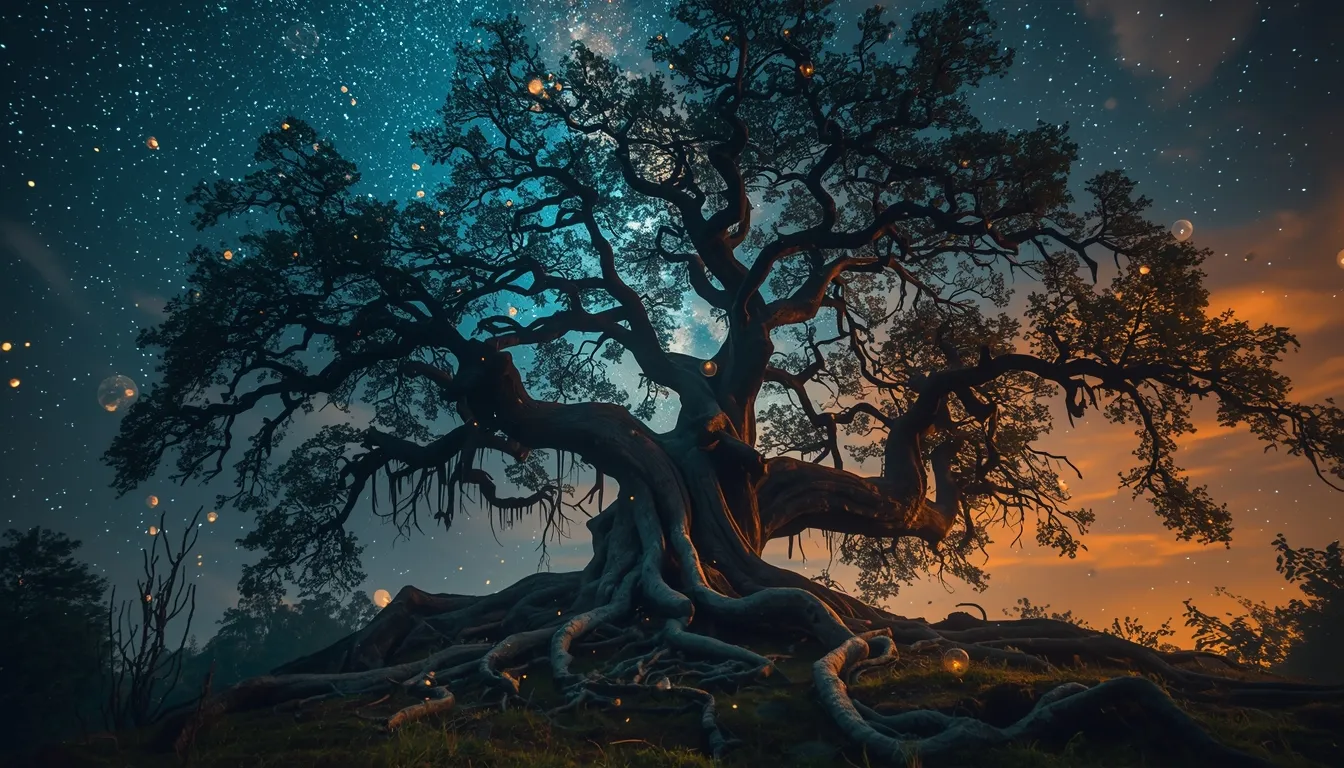

What is the meaning of life? It's the question that philosophers have debated for millennia, that religions claim to answer, that keeps people awake at night. And despite all that thinking, we still don't have a consensus.
Maybe that's because we're asking the wrong question.
The Problem With the Question
When we ask "what is the meaning of life," we're assuming life has a meaning - like a word in a dictionary, with a definition waiting to be discovered. We're assuming someone or something assigned that meaning, and our job is to figure it out.
But what if meaning doesn't work that way?
A hammer has a meaning because someone made it for a purpose. But the universe wasn't made by someone. It doesn't have a manufacturer who intended it for something. Asking "what is the meaning of life" might be like asking "what is the meaning of a mountain" - grammatically correct but fundamentally confused.
This doesn't mean life is meaningless. It means meaning might work differently than we assumed.
Three Ways to Think About Meaning
Let's break this down into three different questions that often get tangled together:
1. Cosmic Meaning
Does the universe have a purpose? Is there a grand plan? Why does anything exist at all?
2. Personal Meaning
What should I do with my life? What matters to me? How should I spend my time?
3. Experiential Meaning
What makes life feel meaningful? When do I feel like my existence matters?
These are different questions with different answers. Let's look at each.
Cosmic Meaning: The Big Picture
Does the universe have a purpose? Traditional religions say yes - God created everything for a reason, and we're part of that plan. But if you can't accept those claims on faith, what's left?
Here's what we know: the universe is 13.8 billion years old. It contains hundreds of billions of galaxies, each with hundreds of billions of stars. It operates according to mathematical laws that we're still discovering. And somehow, in at least one corner of it, matter organized itself into beings that can ask questions about meaning.
That last part is remarkable. The universe developed consciousness. It became aware of itself. Whether that was "intended" or not, it happened. And you're part of it.
You are the universe experiencing itself. Not metaphorically - literally. The atoms in your body were forged in stars. When you wonder about the meaning of life, that's the cosmos wondering about itself.
Is that a "meaning"? Maybe not in the traditional sense. But it's something. You're not a random accident in an indifferent void. You're part of an ongoing process - the universe becoming aware, asking questions, creating things, experiencing itself.
Personal Meaning: Your Life
Even if the universe doesn't have a pre-assigned purpose, your life can still have meaning. In fact, it already does - you just might not have noticed.
Think about what you care about. Your relationships. Your work (or at least parts of it). Your interests. The things that make you angry or sad or joyful. These aren't random - they're expressions of what matters to you.
Personal meaning isn't something you find - it's something you create, often without realizing it. Every time you choose to spend time on something, you're declaring it meaningful. Every relationship you maintain, every project you pursue, every cause you support - these are meaning in action.
The question isn't "what is the meaning of my life" but "what do I want to mean with my life?"
Experiential Meaning: When Life Feels Meaningful
Here's something interesting: we know what makes life feel meaningful, even if we can't define meaning philosophically. Research on this is pretty consistent:
- Connection - Relationships, belonging, feeling part of something larger
- Contribution - Making a difference, helping others, leaving things better than you found them
- Growth - Learning, developing, becoming more than you were
- Presence - Fully experiencing moments, being engaged rather than just going through motions
- Transcendence - Experiences of awe, wonder, feeling connected to something vast
Notice that none of these require knowing the cosmic meaning of life. You can experience deep meaning without having answered the big philosophical questions. Meaning is something you live, not something you solve.
The Pantheist Perspective
There's a worldview that takes all this seriously - that doesn't pretend to have the cosmic answer but also doesn't collapse into nihilism. It's called pantheism.
Pantheism says: the universe itself is what's sacred. Not a God outside it, not a meaning imposed on it, but existence itself - the whole vast, ancient, ongoing process that you're part of.
In this view:
- You're not separate from meaning - You're part of the universe that's generating meaning through conscious beings like you
- Connection is real - You're literally connected to everything else, made of the same stuff, part of the same process
- Experience matters - If the universe spent billions of years developing consciousness, then conscious experience might be the closest thing to a "purpose"
- You get to choose - Without a pre-assigned meaning, you're free to create your own
What This Means Practically
So how do you actually live with this? Here are some practical implications:
Stop Waiting for the Answer
You don't need to solve the meaning of life before you can live meaningfully. In fact, the search for a final answer might be distracting you from the meaning that's already present in your life.
Pay Attention to What Already Matters
You already have things that matter to you. Notice them. Honor them. Stop dismissing them as "not the real meaning" while you search for something bigger.
Create More Than You Consume
Creating things - art, relationships, solutions, experiences - generates meaning. Passive consumption doesn't. If life feels meaningless, you might be consuming too much and creating too little.
Connect
Isolation drains meaning. Connection creates it. This includes connection to other people, to nature, to ideas, to the larger whole you're part of.
Experience Awe
Regularly expose yourself to things that make you feel small in a good way - the night sky, the ocean, old forests, great art. Awe reminds you that you're part of something vast, and that's meaningful even if you can't articulate why.
The Answer That Isn't an Answer
So what is the meaning of life?
I can't give you a definition. No one can. But I can tell you this:
You're here. You're conscious. You're part of a universe that somehow became aware of itself. You can experience beauty, feel love, create things, ask questions, wonder at existence. You're connected to everything else - made of the same atoms, part of the same process, expressions of the same reality.
The meaning of life might not be something you find. It might be something you do. Something you create. Something you experience. Something you are.
The universe existed for 13.8 billion years before it could ask about its own meaning.
Now it can. Through you. Maybe that's not the answer. Maybe it's something better - an invitation to participate in the question.
A Final Thought
The search for meaning is itself meaningful. The fact that you're asking this question - that you care about whether life has a point - is evidence that meaning matters to you. And if meaning matters to you, then in some real sense, meaning exists.
You don't have to figure it all out. You just have to live - really live, not just go through the motions. Pay attention. Connect. Create. Wonder. Love.
That might not be the meaning of life. But it might be enough.