Last night, over dinner, my partner and I fell into one of those conversations. You know the kind - starts with something mundane, then suddenly you're three hours deep into questions about existence, ethics, and what it means to be human.
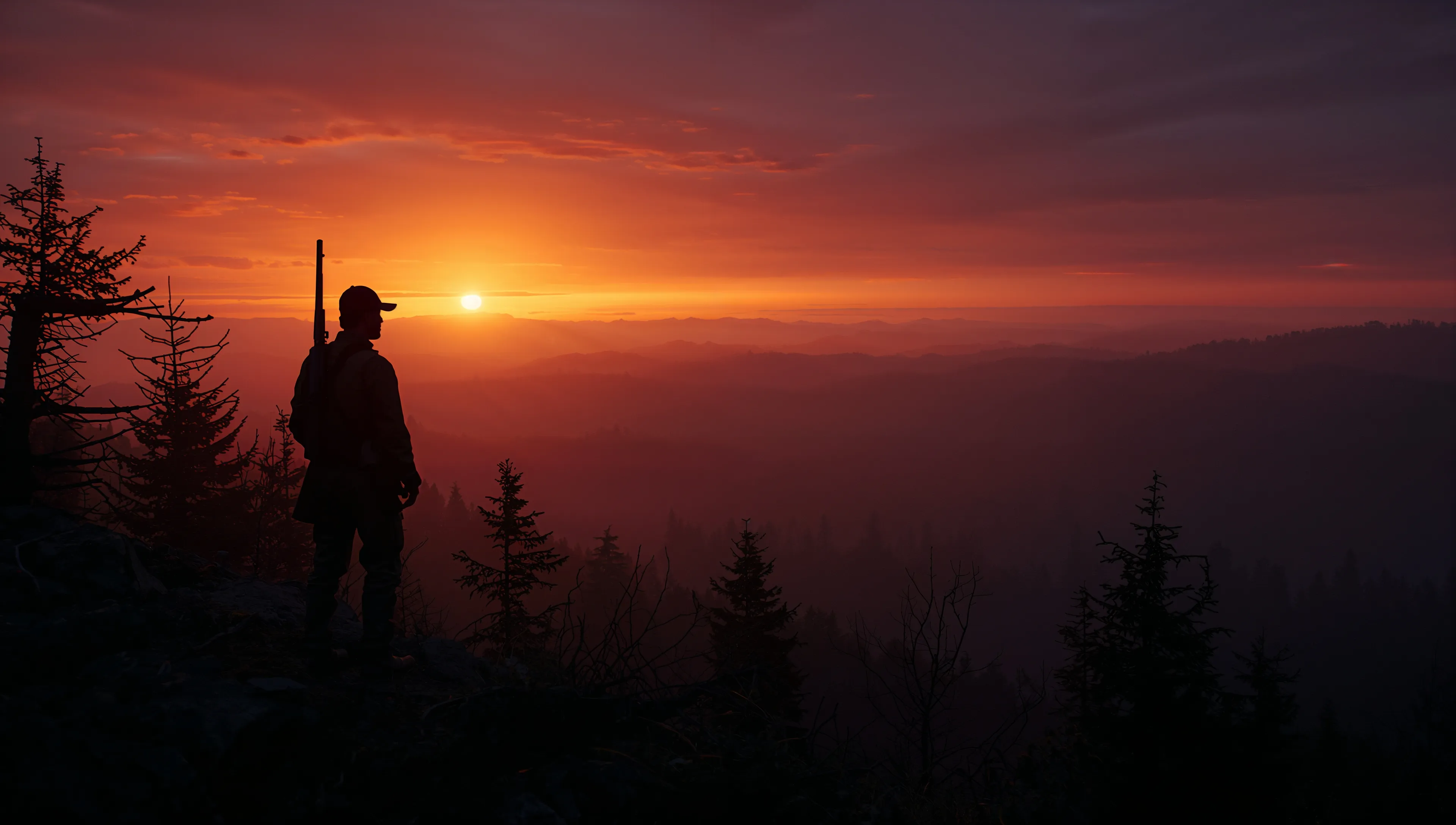
We were talking about hunters. Specifically, the ones who kill invasive species to protect native ecosystems. And then it hit us - the whole thing is absurd.
Hunters exist to fix a problem humans created. Invasive species are only "invasive" because we brought them somewhere they don't belong. Rabbits in Australia. Pythons in the Everglades. Rats on islands where birds evolved without predators. We did that. And now we employ people to go kill them.
We're both the arsonist and the firefighter. The disease and the medicine. The problem and the solution.
Note: This is a personal exploration of pantheist ethics, not a prescription for how anyone should live.
Wait, Though
My partner pointed out the obvious: if humans didn't exist, there'd be no hunters anyway. No invasive species. No disrupted ecosystems. Nature would just... be.
True. But that feels like a cop-out. We do exist. We did disrupt things. And now we're stuck in this weird loop where we're trying to fix problems we created, using methods that only exist because we created the problems in the first place.
It's like setting your house on fire, becoming a firefighter, then taking pride in how brave you are for running into burning buildings. Except you're the one who started the fire.
But here's where it gets interesting for pantheists: we can't step outside nature. We can't be separate from it, even when we're screwing it up. Our mistakes are part of the pattern. Our attempts to fix them are part of the pattern. All of it - the disruption, the restoration, the guilt, the effort - it's all the universe doing what the universe does.
Which doesn't let us off the hook. It just means the hook is more complicated than we thought.
Then We Started Talking About Food
Because of course we did. The hunter thing led straight to: what are pantheists supposed to eat?
Should we only eat fruit? Is eating meat disrespectful to nature? What about factory farming versus hunting? If we see the universe as sacred, if we believe we're part of nature rather than above it, how do we square that with the fact that staying alive requires other things to die?
These questions matter. They're not abstract philosophy - they're about what you put on your plate tonight. About whether you feel guilty when you eat. About how you relate to the web of life that sustains you.
What Pantheism Actually Says (Or Doesn't)
Here's the thing: pantheism doesn't have a rulebook. There's no pantheist kosher. No forbidden foods. No dietary laws handed down from on high.
But there are principles. Ways of thinking that emerge when you really sit with the idea that the universe is sacred and you're part of it.
One: You're not above the food chain. You're in it. Humans evolved as omnivores. We have canines and molars, stomachs that can digest both plants and meat. We're predators and we're prey (or we were, before we got good at not being prey). That's just what we are.
Two: Death feeds life. Always has, always will. Stars explode to scatter the elements that become planets. Plants die to feed animals. Animals die to feed other animals or decompose into soil. Nothing escapes this. Death isn't the opposite of life - it's part of the cycle.
Three: All eating is killing. Even if you only eat plants. Plants are alive. They respond to their environment, communicate through root networks, have complex survival strategies. The question isn't "should I kill to eat?" because the answer is always yes. The question is "what am I killing, and how conscious am I of it?"
Three Ways to Think About It
As we talked, three different approaches kept coming up:
Minimize the Harm
Some pantheists go vegetarian or vegan. The logic: if you can thrive without killing complex, feeling creatures, why wouldn't you? Plants don't have nervous systems. They don't feel pain the way a cow does. So eat plants.
It's not about purity - it's about reducing suffering where you can. You still have to kill to live, but you can choose to kill things that suffer less.
Honor the Cycle
Other pantheists eat meat and don't feel bad about it. Humans are omnivores. We've been hunting and eating animals for hundreds of thousands of years. That's not separate from nature - that is nature.
The key is respect. Gratitude. Awareness. A hunter who uses every part of the animal, who understands what they're taking, who sees themselves as part of the ancient predator-prey dance - that's more aligned with nature than someone who eats factory-farmed chicken without thinking about where it came from.
Heal the System
Then there's the approach that cares less about what you eat and more about how it was produced. Does your food heal ecosystems or harm them? Are you supporting regenerative agriculture? Are you eating in ways that make the world more alive?
Weirdly, this can mean eating meat is sometimes better than eating plants. Some grazing animals, raised right, actually restore grasslands and sequester carbon. Meanwhile, industrial monoculture farming - even organic - can destroy ecosystems.
It's complicated. Which is kind of the point.
What Actually Matters
Here's what we landed on: it's not about what you eat. It's about how you eat it.
Are you conscious? Do you see your food as sacred? Do you understand that something died so you could live, and do you honor that? Are you aware that you're temporarily borrowing atoms from the universe, that you'll return them when you die, that you're part of a cycle of transformation?
A hunter who respects the animal, uses every part, understands their place in the web - they're living more consciously than someone who eats factory-farmed meat without thinking about it.
Someone who grows vegetables with care, composts, returns nutrients to soil, understands the dance of sun and earth and water that creates food - they're participating in something sacred.
The question isn't "meat or plants?" The question is "are you awake to what you're doing?"
Back to the Hunters
So what about the people who kill invasive species to protect native ecosystems? The ones who started this whole conversation?
They're killing, yes. But they're also trying to restore balance. They're acknowledging that humans broke something and taking responsibility for fixing it. They're conscious of the web, even if they're working within a paradox.
Maybe that's the best we can do. We're part of nature, which means we're part of nature's mistakes too. We can't step outside the system. We can only participate more or less consciously.
The hunter who understands this - who sees themselves as part of the cycle, who respects what they kill, who knows they're trying to heal something humans broke - they're doing something meaningful. Even if the whole situation is absurd.
Even Fruit Isn't Innocent
My partner brought up fruit. "What if we only ate fruit? The plant wants us to eat it, right? It's trying to spread its seeds."
Maybe. But every seed is a potential tree. Every apple is an attempt at reproduction. When you eat fruit, you're consuming someone's children. Or at least their chance at children.
There's no pure way to live. No diet that doesn't involve taking life. We're in the web, and the web is messy.
The pantheist approach isn't about finding purity. It's about being conscious. About understanding that you're not separate from nature - you're woven into it. About honoring the fact that you exist at all, that the universe spent billions of years creating you, that you're made of dead stars and you're thinking about ethics.
That's kind of beautiful, actually.
The Paradox Is the Point
Here's what I keep coming back to: maybe the hunter paradox isn't a problem to solve. Maybe it's just... what being human is.
We break things. We try to fix them. We're conscious enough to feel guilty about the breaking and proud of the fixing, even though we're the ones who did both. We're the disease and the medicine, the problem and the solution, the fire and the firefighter.
And all of that - the mistakes, the corrections, the guilt, the effort, the dinner conversations about ethics - all of it is the universe doing what the universe does.
The universe isn't just stars and physics. It's also this: humans screwing up, trying to fix it, thinking about whether they should eat meat, wondering if they're doing it right. It's consciousness waking up to itself, contradictions and all.
We're the cosmos thinking about itself. And sometimes the cosmos thinks "oh shit, I messed up." And then it tries to fix it. Because that's what consciousness does.
We Didn't Solve Anything
My partner and I didn't figure out what pantheists should eat. We didn't solve the hunter paradox. We didn't find the perfect ethical framework.
But we sat with the questions. We honored the complexity. We acknowledged that we're part of something bigger than ourselves - both the breaking and the healing.
Maybe that's enough. Maybe that's the whole point.
Not having answers. Not achieving purity. Just participating consciously in the contradictory process of being alive.
Questions to Sit With
If this resonates with you, here are some questions worth pondering:
Next time you eat:
- Where did this come from?
- What died so I could live?
- Am I conscious of this, or just going through the motions?
- Can I feel grateful without feeling guilty?
When you think about nature:
- Where am I in the web?
- What am I breaking? What am I healing?
- How do I participate in cycles I can't escape?
- What does it mean to be both the problem and the solution?
For your practice:
- Can I see the sacred in the mundane?
- How do I honor what sustains me?
- What does consciousness mean if I'm just atoms?
- How do I participate without pretending I'm pure?
No universal answers. Just universal questions. And maybe that's what pantheism is - not a belief system, but a way of staying awake to the complexity.
Try this: Next time you eat, pause. Look at your food. Think about what died to make this moment possible. The sun, the soil, the water, the life. You're about to participate in the oldest cycle there is - death feeding life, life becoming death, transformation.
You're made of dead stars. You're thinking about ethics. You're the universe experiencing itself. That's pantheism. Not rules, not purity, not separation. Just consciousness, awake to the web, participating in the dance.