
Few natural events inspire awe like an eclipse. The sun disappearing in daylight. The moon turning blood red. For millennia, humans have watched these events with wonder, terror, and reverence. Today, we understand the mechanics - but that doesn't have to diminish the magic.
The Science Is the Magic
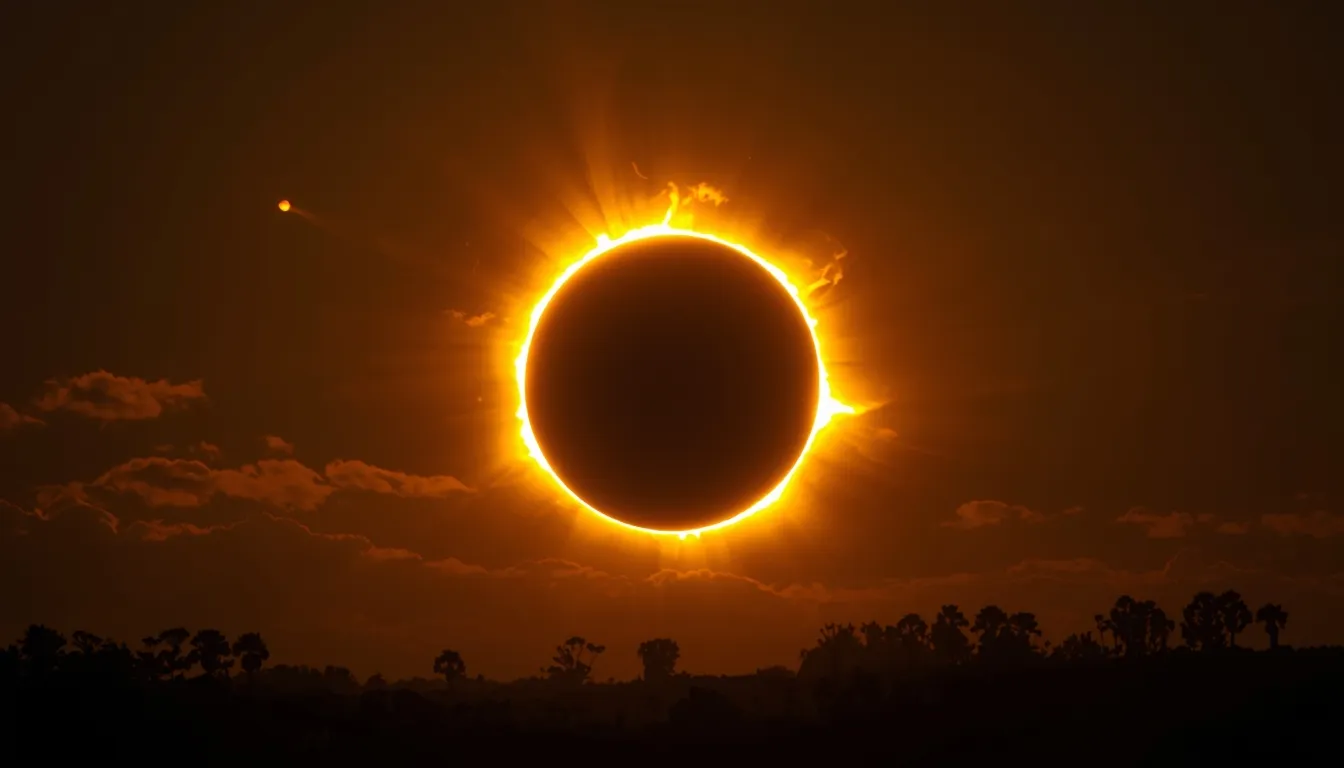
Here's what's actually happening during a solar eclipse: the Moon, which is 400 times smaller than the Sun, passes directly between Earth and Sun. By cosmic coincidence, the Moon is also 400 times closer - making them appear almost exactly the same size in our sky.
This coincidence is temporary. The Moon is slowly drifting away from Earth. In a few hundred million years, total solar eclipses will no longer be possible. We exist in a brief window of cosmic history where this perfect alignment can occur.
That's not less magical than ancient myths about dragons eating the sun. It's more magical - because it's real.
Why Eclipses Move Us
Even knowing the science, eclipses affect us deeply. Why?
- Rarity: Total solar eclipses at any given location happen roughly once every 375 years
- Dramatic change: Day becomes night in minutes; familiar reality shifts
- Shared experience: Everyone in the path sees the same thing together
- Scale: We're witnessing the movement of celestial bodies - forces far beyond human control
- Beauty: The corona, the diamond ring effect, the strange light - eclipses are genuinely beautiful
Superstition vs. Spirituality
Throughout history, eclipses have been interpreted as omens, warnings, or supernatural events. Ancient peoples saw them as:
- Gods fighting in the sky
- Demons devouring the sun
- Portents of disaster or change
- Moments when the veil between worlds thins
We now know eclipses are predictable astronomical events with no influence on earthly affairs. They don't cause earthquakes, wars, or personal transformations. They're not messages from the universe.
But rejecting superstition doesn't mean rejecting meaning. You can experience an eclipse as profoundly spiritual without believing it's supernatural.
Naturalistic Eclipse Spirituality
Here's how to approach an eclipse with both scientific understanding and genuine reverence:
Appreciate the Mechanics
The fact that we can predict eclipses to the second, centuries in advance, is itself remarkable. It demonstrates the regularity of nature, the power of human understanding, and the clockwork precision of celestial mechanics.
Feel Your Smallness
An eclipse reminds us that we're on a rock hurtling through space, orbited by another rock, both circling a nuclear furnace. The scale is humbling. Let yourself feel small - not insignificant, but appropriately sized.
Feel Your Connection
You're made of atoms forged in stars like the one being eclipsed. The iron in your blood, the calcium in your bones, the oxygen you breathe - all of it was created in stellar furnaces. You're not just watching the cosmos; you're part of it watching itself.
Share the Experience
Eclipses are communal events. Watch with others. Notice how strangers become connected in shared wonder. This is one of the oldest human experiences - people have gathered to watch eclipses for tens of thousands of years.
Let Yourself Feel Awe
Awe is a legitimate emotion, not a sign of ignorance. Scientists who understand eclipses perfectly still feel awe watching them. Understanding doesn't diminish wonder - it deepens it.
Eclipse Practices
Some ways to make an eclipse more meaningful:
- Prepare: Learn about the eclipse beforehand - what type, what to expect, what causes it
- Be present: Put away phones (except for safe viewing). Experience it directly
- Notice details: The changing light, animal behavior, temperature drop, the corona
- Reflect: Use the moment to consider your place in the cosmos
- Journal: Write about the experience afterward while it's fresh
- Connect it to life: What in your life is being "eclipsed"? What's emerging?
The Metaphor Without the Magic
Eclipses make powerful metaphors - light and darkness, revelation and concealment, the temporary nature of all things. You can use these metaphors for reflection without believing the eclipse is literally sending you a message.
The universe isn't communicating with you through eclipses. But you can use eclipses as occasions for self-reflection. The meaning comes from you, not from the cosmos - and that's okay.
Upcoming Eclipses
Eclipses happen several times a year somewhere on Earth. Total solar eclipses are rarer for any given location. Check NASA's eclipse website for upcoming events visible from your area.
If you ever have the chance to see a total solar eclipse, take it. People who've seen one often describe it as one of the most profound experiences of their lives - not because of superstition, but because of the raw power of witnessing cosmic mechanics in action.
Wonder Without Woo
You don't need to believe in astrology, omens, or supernatural forces to find eclipses meaningful. The real thing - a moon passing in front of a star, shadows racing across a planet, the corona blazing in a darkened sky - is more than enough.
Science doesn't steal the magic. It reveals a deeper magic - one that's actually true.